
Introduction
Using an up-to-date, jurisdiction-specific lease agreement matters. Arkansas allows broad contractual freedom in landlord–tenant relationships, but Title 18 of the Arkansas Code, the Arkansas Deceptive Trade Practices Act (A.C.A. § 4-88-101 et seq.), and federal disclosure rules (e.g., 42 U.S.C. § 4852d on lead-based paint) impose required disclosures, limits on how disputes are handled, and penalties for deceptive practices. This template is written for Arkansas landlords and tenants: it includes security deposit procedures, suggested notice periods for termination and cure, and the mandatory federal and state disclosures you must deliver to residents.
Before finalizing: confirm local city or county ordinances (some localities impose additional rules) and run the executed lease through a contract verification tool like an AI contract review tool to flag omissions, inconsistent clauses, or missing statutory language.
For a comprehensive lease review checklist covering residential and commercial terms, see our Lease Agreement Review Guide.
What is an Arkansas residential lease?
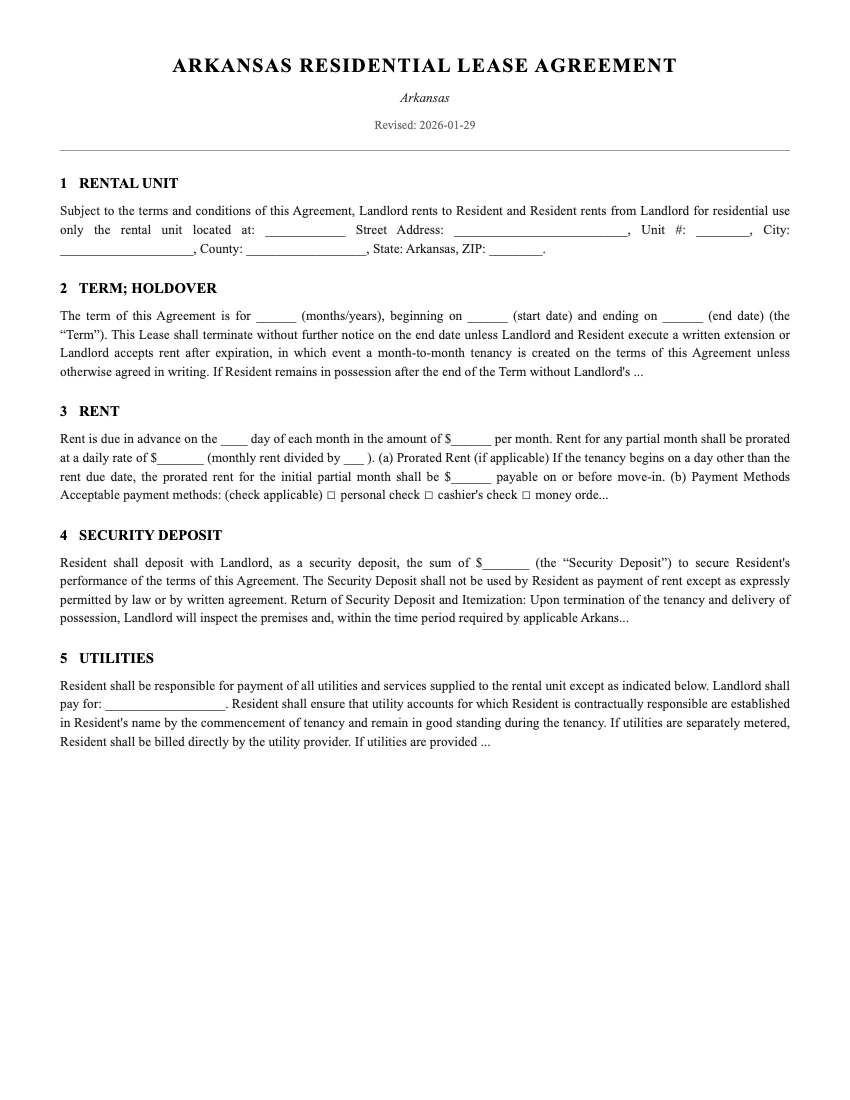
A residential lease in Arkansas is a written contract between a landlord and tenant that sets the terms of occupancy for a dwelling located in Arkansas — including rent, security deposit, duration, permitted uses, maintenance responsibilities, disclosures required by federal and state law (such as lead-based paint and consumer-protection notices), and remedies for breach. Leases are governed by the Arkansas Code (Title 18) and applicable federal law (for example, 42 U.S.C. § 4852d for lead disclosures).
Why Old Templates Are Dangerous (Arkansas-specific traps)
- Missing federal lead-based paint disclosure (42 U.S.C. § 4852d). Homes built before 1978 require a HUD/EPA disclosure form and any known lead hazards.
- Incomplete security deposit procedures. Arkansas does not set a statewide maximum deposit, but it requires accounting and itemization. Old templates often omit an itemization clause or a clear refund timeframe, exposing landlords to statutory penalties and consumer-protection claims (A.C.A. § 4-88-101 et seq.).
- Outdated eviction and notice language. Arkansas eviction practices use forcible entry and detainer procedures under Title 18; many older forms use incorrect notice windows (e.g., failing to include a 3‑day pay‑or‑quit where appropriate or an agreed cure period for breaches).
- Failure to include statutorily required consumer-protection notices. The Arkansas Deceptive Trade Practices Act and related guidance can be implicated by misleading lease terms or material omissions.
- Noncompliant local rules. Some Arkansas cities or counties may have additional registration, inspection, or rental licensing requirements. Old statewide templates rarely account for new local ordinances.
What's Included in This Template
- Clear parties, premises, term, and rent clauses (with an area to specify rent increase mechanics)
- Security deposit clause with itemization requirement and contractual refund timing
- Move-in/move-out condition and inventory checklist language
- Maintenance, repair responsibilities, and statutory habitability standards references
- Entry by landlord clause with suggested notice language (consistent with Arkansas practices)
- Notice and default sections: suggested 3‑day pay‑or‑quit language for nonpayment, and 7–14 day cure periods for non-monetary breaches (customizable based on landlord/tenant agreement)
- Required disclosures: federal Lead-Based Paint Disclosure (42 U.S.C. § 4852d), Arkansas Deceptive Trade Practices/consumer notice, public sex offender registry notice (ACIC), and Flood Hazard informational notice
- Remedies and eviction process description with a reminder to follow Arkansas forcible entry and detainer procedures in Title 18
- Optional clauses: pet addendum, subletting rules, late fees, utilities allocation, and renter insurance requirement
- Signature blocks and receipt language for delivery of disclosures
Related Lease Agreement Templates
Download Options
- Single-unit printable PDF: /downloads/arkansas-lease-agreement-2026.pdf
- Editable Word/DOCX version (for customization): available on request at our downloads page — use before final review by an AI contract review tool
- Add-on packages: move-in checklist, pet addendum, lead-paint disclosure form (pre-filled), and clause packages for furnished vs unfurnished units
How to Finalize Your Lease
- Customize the template to reflect the agreed rent, term, deposit amount, and any special conditions.
- Attach mandatory disclosures: federal Lead-Based Paint Disclosure (if built pre-1978), consumer-protection notice, sex offender registry notice, and flood hazard notice.
- Run the complete lease through an AI contract review tool for an automated compliance check and to generate a final checklist of missing items or inconsistent clauses.
- Deliver the lease and disclosures to the tenant in accordance with Arkansas law; obtain signed originals or execute electronically if both parties agree to e-signatures.
- Complete a move-in checklist with tenant signatures and provide a copy. Store deposit details and where funds are held; include banking information if contract provides for interest-bearing account.
- Retain copies and note contract dates, notice windows, and payment schedules. If a dispute arises, the statutory limitation period for written contracts is five years (A.C.A. § 16-56-111).
Important Arkansas Notes (quick reference)
- Security deposits: no statewide statutory cap; itemization of deductions is required; Arkansas does not impose a statewide interest payment requirement — any interest obligation must be in writing in the lease (see Ark. Code Ann. Title 18).
- Rent control: none at the state level. Landlords may increase rent consistent with the lease and any applicable local ordinance.
- Eviction practice: common 3‑day pay‑or‑quit for nonpayment; 30‑day notice common for month-to-month termination. Always follow Arkansas forcible entry and detainer procedures in Title 18.
- Required disclosures: lead-based paint (42 U.S.C. § 4852d; HUD/EPA), Arkansas Deceptive Trade Practices Act notice (A.C.A. § 4-88-101 et seq.), sex-offender registry info (ACIC), and flood-hazard notice where applicable.
Legal Reminder
This template is a starting point. It incorporates Arkansas-specific defaults and recommended language but is not a substitute for legal advice tailored to your facts. Use an AI contract review tool to check for internal consistency and then consult an Arkansas-licensed attorney for changes that raise statutory or local ordinance questions.
<div class="ml-embedded" data-form="bBZ9zR"></div>
Frequently Asked Questions

About Designer Content
Designer Content creates practical legal document resources for landlords, contractors, and small business owners. We simplify complex legal concepts into actionable guidance. Connect with us on LinkedIn.