
Introduction
A properly drafted lease protects both landlord and tenant. In Texas, compliance is especially important because Chapter 92 of the Texas Property Code and Chapter 24 (forcible-detainer) create specific landlord and tenant rights and remedies — including a 30-day deadline for security deposit accounting (Tex. Prop. Code §92.103), tenant repair-and-remedy rights for conditions affecting health and safety (Tex. Prop. Code §92.056), and stiff penalties for bad-faith retention of deposits (Tex. Prop. Code §92.109). Texas also forbids municipal rent control (Tex. Local Gov't Code §214.902). This template is tailored to those rules and to required federal disclosures (lead-based paint, 42 U.S.C. §4852d).
Use this template as a starting point. Customize lease terms that are lawful under Texas law (e.g., notices, rent due dates, late fees) and use the AI contract review tool contract analysis tool to verify your final document before signing.
For a comprehensive lease review checklist covering residential and commercial terms, see our Lease Agreement Review Guide.
What is a Texas residential lease?
A Texas residential lease is a written contract between a landlord and tenant that sets the terms for the tenant's occupancy of a dwelling in Texas. It allocates rent, security deposit handling, maintenance responsibilities, notice periods for termination, and remedies for breach. A valid lease must comply with Texas Property Code Chapter 92 (Landlord and Tenant), the forcible-detainer statutes in Chapter 24, and applicable federal disclosures (for example, lead-based paint rules for pre-1978 housing).
Why Old Templates Are Dangerous (Texas-specific traps)
- Security-deposit handling mistakes: Older leases sometimes promise deadlines or procedures that conflict with Tex. Prop. Code §92.103 (30-day accounting after surrender when tenant provides a forwarding address) and fail to explain the remedy under Tex. Prop. Code §92.109 (treble damages + $100 + attorney's fees for bad-faith withholding).
- Rent-control language or assumptions: Texas bans local rent control (Tex. Local Gov't Code §214.902). Using templates from rent-controlled jurisdictions will include invalid rent rules.
- Eviction shortcuts: Many out-of-date templates suggest "self-help" remedies (lockouts, utility shutoffs). Those are illegal — landlords must follow forcible-detainer procedures under Tex. Prop. Code Ch. 24.
- Missing repair-and-remedy notice: Tenants have statutory repair-and-remedy rights for conditions materially affecting health and safety (Tex. Prop. Code §92.056). Templates that omit the notice or cure procedures risk noncompliance.
- Lead-paint and other federal requirements: For housing built before 1978, federal law (42 U.S.C. §4852d) requires specific lead-based paint disclosures and a pamphlet; failing to attach these can lead to liability.
What's Included in This Template
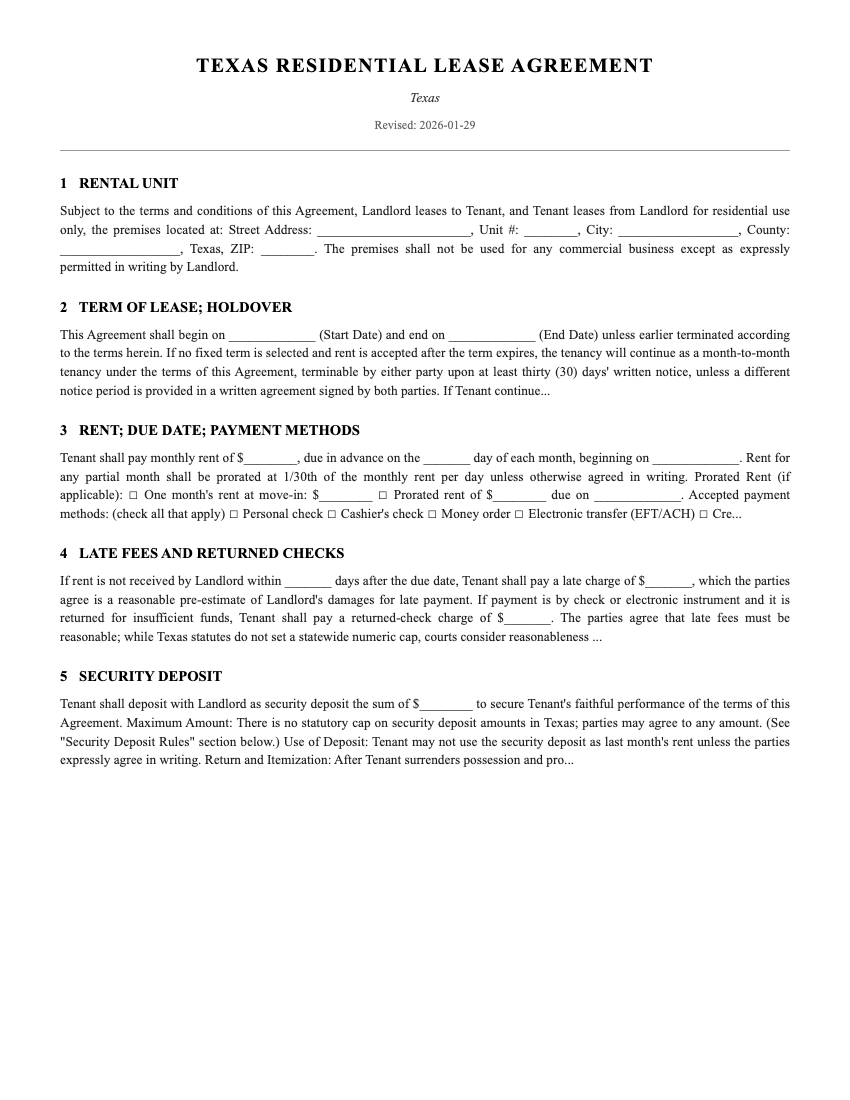
- Parties and property identification with landlord/agent name and address language that satisfies Tex. Prop. Code §92.201.
- Term, rent amount, late fees and returned-check provisions (customizable within Texas law limits).
- Security deposit clause with required itemization language and the 30-day return/accounting reference (Tex. Prop. Code §92.103) and explanation of tenant remedies under Tex. Prop. Code §92.109.
- Repair-and-remedy procedure referencing Tex. Prop. Code §92.056 and a sample notice form for reporting repairs.
- Notice provisions for nonpayment and termination consistent with forcible-detainer practice (typical 3-day notice for nonpayment; see Tex. Prop. Code Ch. 24).
- Required disclosures section: lead-based paint (42 U.S.C. §4852d), landlord identity and address (Tex. Prop. Code §92.201), repair-and-remedy notice (Tex. Prop. Code §92.056), and smoke/CO detector status (include local code compliance and tenant acknowledgement).
- Optional addenda: pet policy, subletting/assignment rules, parking, utilities allocation, and move-in/move-out condition checklist.
- Signature blocks for all parties and witness/acknowledgment areas.
Download Options
- One-page quick lease (month-to-month) — good for short-term rentals and simple agreements.
- Standard fixed-term lease (1-year) — full clauses for maintenance, deposits, and notice periods.
- Landlord-friendly and balanced versions — choose the balance of protections and tenant-friendly language appropriate for your property and risk appetite.
Download the PDF: /downloads/texas-lease-agreement-2026.pdf
How to Finalize Your Lease
- Customize the essential fields (names, property address, rent, term, deposit amount).
- Confirm required disclosures are completed and attached (lead-based paint pamphlet for pre-1978 housing; landlord identity statement; repair-and-remedy notice; smoke/CO detector status or local ordinance compliance).
- Run the completed lease through an AI contract review tool for a statutory/compliance check against Texas Property Code Ch. 92 and Ch. 24.
- Deliver the signed lease to the tenant and retain a fully executed copy. Keep the move-in checklist and any condition photos.
- If collecting a security deposit, follow the notice and accounting requirements in Tex. Prop. Code §92.103 and maintain records for deductions.
Additional Tips
- Late fees and penalties: Texas does not statutorily cap late fees for residential leases, but unreasonable or unconscionable fees can be disputed in court. Always set clear, reasonable late fee terms in the lease.
- Rent increases: No statewide rent caps — landlords can raise rent according to the lease or by proper notice for month-to-month agreements; local rent control is prohibited (Tex. Local Gov't Code §214.902).
- Evictions: Never attempt self-help. Follow forcible-detainer suit procedures in Tex. Prop. Code Ch. 24.
Related Lease Agreement Templates
FAQs
(See FAQ section below for detailed answers to common Texas-specific questions.)
<div class="ml-embedded" data-form="bBZ9zR"></div>
Frequently Asked Questions

About Designer Content
Designer Content creates practical legal document resources for landlords, contractors, and small business owners. We simplify complex legal concepts into actionable guidance. Connect with us on LinkedIn.