
Introduction
Using an up-to-date lease in Arizona matters. The Arizona Residential Landlord and Tenant Act (A.R.S. § 33-1321 et seq.) governs key landlord and tenant duties — including how security deposits are handled, what written notices are required to terminate or enforce a lease, and the procedures landlords must follow before evicting a tenant. This template is updated for 2026 and is tailored to Arizona’s statutory requirements: no statewide cap on security deposits, a required itemized accounting and a 14-calendar-day return or accounting requirement after tenancy ends, and the federal lead-based paint disclosure for pre-1978 housing. Local city or county ordinances may add requirements — always confirm local rules before signing.
This article explains what the lease does, why older templates can create legal risks in Arizona, what is included in the downloadable template, and step-by-step instructions to finalize it. Use the AI contract review tool Safety Check section below to verify your finalized lease for plain-language problems and missing disclosures before you sign or distribute it.
For a comprehensive lease review checklist covering residential and commercial terms, see our Lease Agreement Review Guide.
What is an Arizona residential lease?
A residential lease in Arizona is a written contract between a landlord and tenant that sets the terms for occupancy of a dwelling within the state. It establishes rent, payment dates, security-deposit terms, permitted occupants and uses, maintenance and repair obligations, required disclosures (including federal lead-based paint for pre-1978 housing and state notices), notice periods for termination or breach, and procedures that will be followed in the event of nonpayment or other lease violations. Arizona leases must comply with the Arizona Residential Landlord and Tenant Act (A.R.S. § 33-1321 et seq.) and any applicable local ordinances.
Why Old Templates Are Dangerous (Arizona-specific traps)
- Security-deposit errors: Arizona does not cap deposits statewide, but the law requires an itemized statement and timely return (14 calendar days after tenant vacates and delivers possession). Old forms that promise an automatic cap or do not require itemization can create liability under A.R.S. § 33-1321 et seq.
- Incorrect notice language: Eviction and cure notices must comply with Arizona’s statutory procedures. Using conflicting or non‑statutory notice periods (or failing to provide a written cure-or-quit when required) can delay or invalidate a forcible detainer (eviction) action in Arizona courts.
- Missing federal/state disclosures: Federal lead-based paint disclosures (42 U.S.C. § 4852d) are mandatory for most units built before 1978; Arizona also expects landlords to provide statutorily required landlord-tenant notices and the sex-offender registry notice required by state guidance. Older templates may omit these disclosures.
- Local ordinance conflicts: Cities like Phoenix, Tucson, or Flagstaff may have local rules (rental permitting, inspection programs, or additional disclosure requirements). Using a one-size-fits-all form risks noncompliance with local regulations.
- Waivers that are unenforceable: Some old forms ask tenants to waive statutory protections (for example, waiving the right to a written itemized deposit statement). Arizona statutes and courts limit enforceability of waivers of statutory rights.
What's Included in This Template
- Parties and property description (accurate address and unit identifiers).
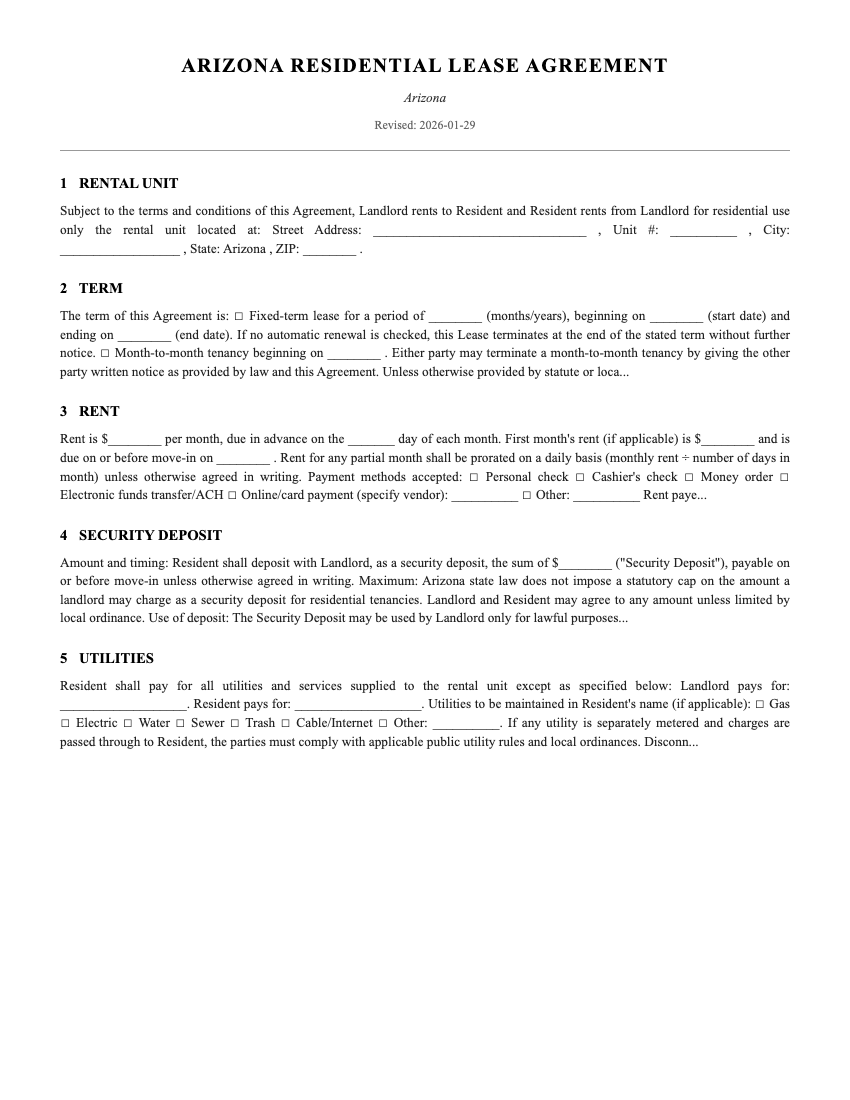
- Lease term options: fixed-term and month-to-month language with standard 30-day termination language for periodic tenancies.
- Rent, late fees, returned check fees, and acceptable payment methods.
- Security deposit clause: amount (no state cap), clear itemization requirement, and the statutory 14-calendar-day return/accounting language per A.R.S. § 33-1321 et seq.
- Maintenance and repair obligations, including tenant notice procedures for habitability issues.
- Entry and notice provisions that reflect Arizona practice (reasonable notice for non-emergency entry; written notice recommended).
- Cure-or-quit and nonpayment notice templates that reflect common Arizona practice (5-day pay-or-vacate for nonpayment; 10-day cure-or-quit for other material breaches) while directing landlords to follow A.R.S. § 33-1321 et seq. and local court rules.
- Required disclosures: federal lead-based paint form (42 U.S.C. § 4852d) for pre-1978 units, Arizona Residential Landlord and Tenant Act notice, and sex-offender registry public notice guidance.
- Pet, smoking, subletting, and guest policies with recommended limits and manager approval language.
- Default and remedies clause with reference to Arizona eviction (forcible detainer) procedures.
Related Lease Agreement Templates
Download Options
- PDF (ready-to-print): /downloads/arizona-lease-agreement-2026.pdf
- Editable DOCX: Available on request — contact support to receive an editable copy you can adapt for specific property facts.
- Online signable version: Use your e-signature platform after running the final draft through an AI contract review tool for verification.
How to Finalize Your Lease
- Complete the template with accurate property and party information.
- Add the actual security-deposit amount and confirm any local ordinance limits or registration requirements.
- Attach required disclosures: federal lead disclosure (if built before 1978), Arizona landlord-tenant notice, and sex-offender registry notice.
- Run the completed lease through an AI contract review tool for a clause-by-clause check and keep the AI contract review tool report with your files.
- Deliver the lease and disclosures to the tenant and obtain signatures from all adult tenants and the landlord/agent.
- Provide the tenant with a move-in condition checklist and retain a dated inventory and photos as supporting evidence for future deposit accounting.
Quick Reminder on Evictions and Notices
- Nonpayment: Common practice in Arizona is a 5-day pay-or-vacate notice for rent nonpayment, but always confirm statutory steps under A.R.S. § 33-1321 et seq. and local court requirements before filing a forcible detainer action.
- Breach: A 10-day written cure-or-quit is commonly used for material lease violations, but the lease should match statutory expectations and the Arizona court forms.
- Month-to-month: A 30-day written termination notice is customary for periodic tenancies unless a different period is specified and lawful.
Additional Resources
- Arizona Residential Landlord and Tenant Act (A.R.S. § 33-1321 et seq.) — use the statutes for exact procedural language and to confirm any updates.
- Arizona Courts forcible detainer (eviction) procedures for local filing rules and forms.
If you need a customized lease (for rent-to-own, corporate leasing, or special-use properties), consult an Arizona landlord-tenant attorney and re-run the final contract with an AI contract review tool before use.
<div class="ml-embedded" data-form="bBZ9zR"></div>
Frequently Asked Questions

About Designer Content
Designer Content creates practical legal document resources for landlords, contractors, and small business owners. We simplify complex legal concepts into actionable guidance. Connect with us on LinkedIn.