
Introduction
A properly drafted lease keeps landlords and tenants safe, enforces expectations, and reduces the risk of disputes. In Colorado, leases must comply with state statutes (Title 38 and related provisions) and federal disclosure rules. This template is built to reflect key Colorado requirements: security deposit handling and itemization timelines (C.R.S. § 38-12-103), limits on late fees (C.R.S. § 38-12-105), statutory notice periods for nonpayment and other lease violations (see C.R.S. § 13-40-104 and related provisions), and mandatory disclosures such as lead-based paint (federal) and certain Colorado-specific notices (methamphetamine contamination if known, HOA/common interest status, military noise areas, and bed-bug information where local law requires).
Using an up-to-date template helps avoid costly mistakes. Colorado prohibits local rent-control ordinances (C.R.S. § 38-12-301), but local rules may impose additional disclosure or habitability standards. Always check city or county rules that apply to your property.
For a comprehensive lease review checklist covering residential and commercial terms, see our Lease Agreement Review Guide.
What is a Colorado residential lease?
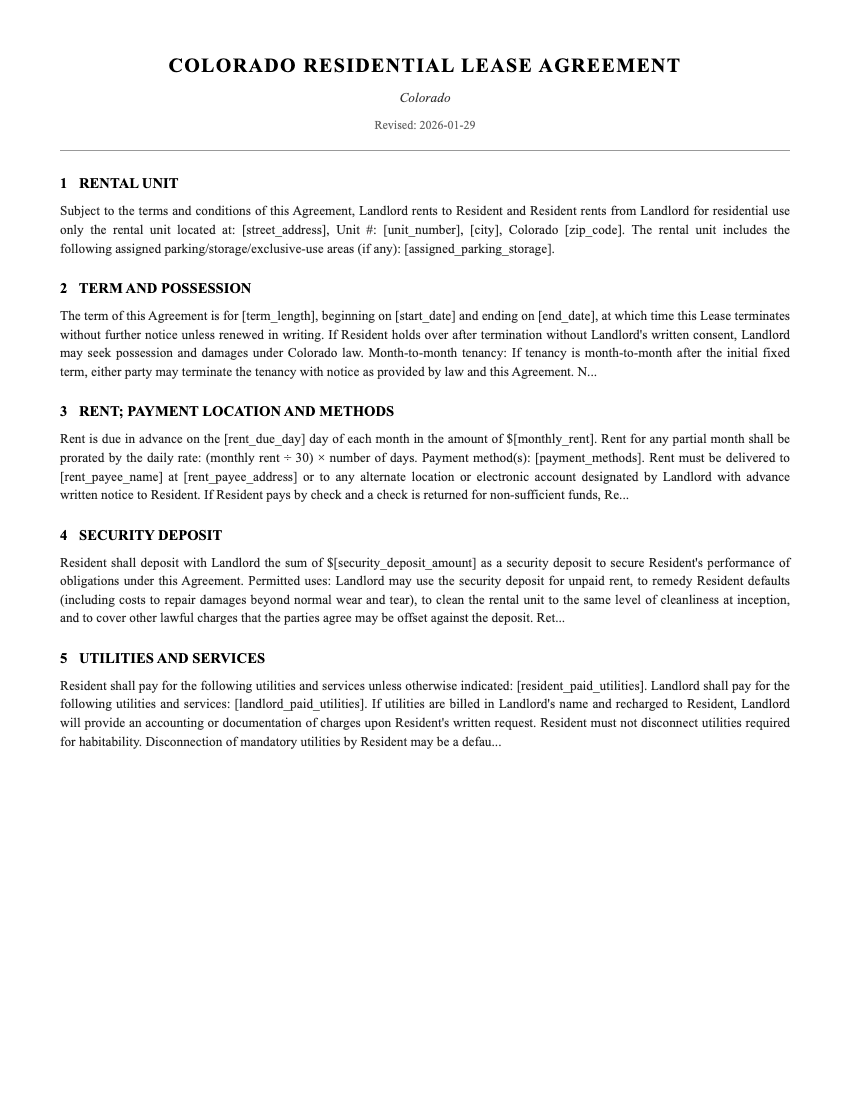
A Colorado residential lease is a written agreement between a landlord and tenant that sets the term of tenancy, rent, security deposit terms, required disclosures, landlord and tenant obligations for maintenance and entry, notice and cure periods, and remedies for breach — drafted to comply with Colorado statutes (notably Title 38) and applicable federal law.
Why Old Templates Are Dangerous (Colorado-specific traps)
- Security deposit timing and itemization: Colorado requires an itemized statement and return of the deposit within 30 days after tenancy termination and delivery of possession (see C.R.S. § 38-12-103). Old templates may reference outdated timelines or lack itemization language, exposing landlords to claims.
- Incorrect notice periods: Nonpayment demands and eviction-related notices have statutory timelines. For example, Colorado practice generally expects a 10‑day demand for unpaid rent with a right to cure before certain proceedings; other violations often use 21-day cure notices depending on lease terms and statutes (see C.R.S. § 13-40-104 and court rules). Using a template with incorrect cure periods can result in dismissed filings or delay in relief.
- Fee and penalty errors: C.R.S. § 38-12-105 limits enforceable late fee practices. Old forms may impose unlawful fee structures or penalties (e.g., excessive flat penalties instead of reasonable, documented late fees).
- Missing federal and state disclosures: Federal lead-based paint rules (42 U.S.C. § 4852d; 24 C.F.R. Part 35) apply to pre-1978 housing and must be accompanied by EPA/HUD pamphlets. Colorado landlords also must disclose known methamphetamine contamination, HOA/common interest status, and military noise considerations where applicable. Missing these can create statutory or contract-based claims.
- Local ordinance conflicts: Although Colorado prohibits local rent control (C.R.S. § 38-12-301), many municipalities have tenant-protection ordinances (notice requirements, inspection processes, bed-bug or other local disclosure rules). An old state-only template may miss local mandates.
What's Included in This Template
- Parties and premises identification (landlord(s), tenant(s), unit address)
- Lease term options (fixed-term and month-to-month clauses)
- Rent amount, due date, accepted payment methods, and late fee structure (aligned with C.R.S. § 38-12-105)
- Security deposit clause with itemization and 30-day return language consistent with C.R.S. § 38-12-103 and notes on local variations
- Utilities and service responsibilities
- Repairs, habitability obligations and notice/entry provisions (landlord access consistent with Colorado common-law and statutory practice)
- Notice and cure procedures for nonpayment and lease violations reflecting Colorado timelines (default cure/demand language for 10-day nonpayment demand and standard cure periods)
- Required disclosures section (lead-based paint, meth contamination if known, HOA/common interest community status, military noise, bed-bug information where applicable)
- Early termination, subletting, assignment and holdover rules
- Pet, smoking, and guest policies
- Move-in/move-out inspection and damage/cleaning standards
- Signature blocks and optional fields for electronic signatures
All clauses are written for clarity and to reduce litigation risk; however, use an AI contract review tool or an attorney to verify specifics for your city or property type.
Download Options
- Quick fill PDF (recommended for single-unit landlords) — fill, print, sign: /downloads/colorado-lease-agreement-2026.pdf
- Editable Word doc (for advanced customization) — customizable fields and clauses
- E-sign enabled version (compatible with common e-sign platforms) — for remote signing and automated audit trails
Each download includes a checklist of required Colorado and federal disclosures and an editable "Local Requirements" appendix so you can add city- or county-level obligations.
How to Finalize Your Lease
- Confirm the correct lease term and rent amount in the document.
- Complete the required disclosures (lead paint, meth contamination if known, HOA, military noise, bed-bug info as applicable).
- Specify the security deposit amount and ensure the itemization and return timeline (30 days) and deduction examples are included.
- Have all adult tenants sign and date the lease; ensure landlord signature(s) and contact information are included.
- Run the signed lease through an AI contract review tool for a compliance and completeness check. The tool will flag inconsistent notice language, missing disclosures, or clauses that conflict with Colorado statutes.
Final checklist (before move-in)
- Tenant receipt of all required disclosures and the signed lease
- Move-in inspection report signed by both parties
- Keys and access arrangements documented
- Notice to tenants of how to submit repair requests and whom to contact in emergency
Related Lease Agreement Templates
FAQs
- Q: How much security deposit can a landlord charge in Colorado?
A: Colorado state law does not set a maximum amount for security deposits. Parties may agree to any amount consistent with contract law and anti-discrimination rules. However, Colorado requires an itemized statement of deductions and return of any balance within 30 days after termination of tenancy and delivery of possession (C.R.S. § 38-12-103). Local ordinances may impose additional rules, including interest requirements in some municipalities. - Q: Is there rent control in Colorado?
A: No. Colorado law prohibits local governments from enacting rent control ordinances (C.R.S. § 38-12-301). There is no statewide cap on rent increases. Landlords should follow the lease terms for increases and any applicable federal program restrictions (e.g., HUD-assisted units) and check for any local tenant-protection ordinances that affect notice requirements. - Q: What disclosures are required when renting residential property in Colorado?
A: Required disclosures include: federal lead-based paint disclosure for properties built before 1978 (42 U.S.C. § 4852d; 24 C.F.R. Part 35), disclosure of known methamphetamine contamination, notice of common interest community/HOA rules when applicable, notice of military installations/noise zones if applicable, and bed-bug information or reporting requirements where local law mandates. Include these in the lease and give tenants the required pamphlets and statements. - Q: What notice is required before starting an eviction for nonpayment?
A: For nonpayment, landlords generally provide a written demand for rent with an opportunity to cure — commonly a 10-day demand for payment before filing for possession — and must follow statutory and court procedures (see C.R.S. § 13-40-104 and applicable court rules). Exact procedures vary; always follow the statute and local court instructions for forcible entry and detainer filings. - Q: Can a landlord restrict guests or short-term sublets?
A: Yes. A lease can lawfully set reasonable guest and subletting rules, including limits on duration of guest stays, prior written consent for sublets, and requirements for notice. However, clauses must be applied consistently and comply with anti-discrimination rules and any local ordinances that protect tenant rights. - Q: Are landlords required to pay interest on security deposits in Colorado?
A: Colorado state law does not generally require interest on security deposits. Some municipalities may require interest; landlords should check local ordinances. Regardless, landlords must provide an itemized statement of deductions and return any balance within 30 days after the tenancy ends and possession is delivered (C.R.S. § 38-12-103).
<div class="ml-embedded" data-form="bBZ9zR"></div>
Frequently Asked Questions

About Designer Content
Designer Content creates practical legal document resources for landlords, contractors, and small business owners. We simplify complex legal concepts into actionable guidance. Connect with us on LinkedIn.