
Introduction
Leases that don't reflect Indiana law expose landlords and tenants to unnecessary risk: invalid notices, improperly withheld deposits, or unenforceable terms. This Indiana Residential Lease Agreement template is tailored to the state's landlord-tenant framework (Indiana Code Title 32, Article 31) and includes the common statutory and practice-based requirements you must watch for—security deposit handling, necessary disclosures (including federal lead-based paint rules and the Indiana Sex and Violent Offender Registry notice), and practical notice periods for termination and summary possession.
Use this template as a foundation, then customize it to the property, the agreed-upon term, and any local ordinance requirements. Where state law is silent, parties can agree to reasonable terms, but those agreements cannot conflict with federal or state statutes, anti-discrimination laws, or mandatory disclosures.
For a comprehensive lease review checklist covering residential and commercial terms, see our Lease Agreement Review Guide.
What is an Indiana residential lease?
A residential lease in Indiana is a written contract between a landlord and tenant that sets the terms of a rental arrangement for a dwelling. It allocates rights and responsibilities—rent, security deposit procedures, maintenance obligations, disclosures, and termination rules—under Indiana law (see Indiana Code Title 32, Article 31). A properly drafted lease helps enforce lawful notices, supports eviction procedures if necessary, and documents move-in condition and deposit claims.
Why Old Templates Are Dangerous (Indiana-specific traps)
- Security deposit timing and itemization: Indiana practice (and court expectations under Title 32) requires timely return and a written itemization of deductions. Older forms often omit the itemization requirement or the commonly observed 45-day return expectation, creating disputes.
- Missing federal and state disclosures: Pre-1978 dwellings require the federal Lead-Based Paint Disclosure (24 C.F.R. Part 35). Indiana landlords must also provide notice regarding the Indiana Sex and Violent Offender Registry. An old generic template may not include either.
- Incorrect notice periods for summary possession: Many older leases use uniform cure periods or notice language that doesn't match Indiana summary possession practice. For nonpayment, Indiana filings commonly rely on short cure notices (often 10 days in practice) before filing for summary possession, but landlords must follow statutory procedures under Title 32 and local court rules.
- Conflicting local rules and municipal codes: Indiana has no statewide rent control, but some municipalities and universities may have specific ordinances affecting licensing, registration, or safety standards. Old templates rarely account for local registration, licensing, or inspection requirements.
- Habitability and repair clauses: Indiana law and cases impose landlord responsibilities for habitability and repair; overly broad disclaimers or waiver language can be unenforceable.
What's Included in This Template
- Parties and property identification (full legal names, mailing addresses)
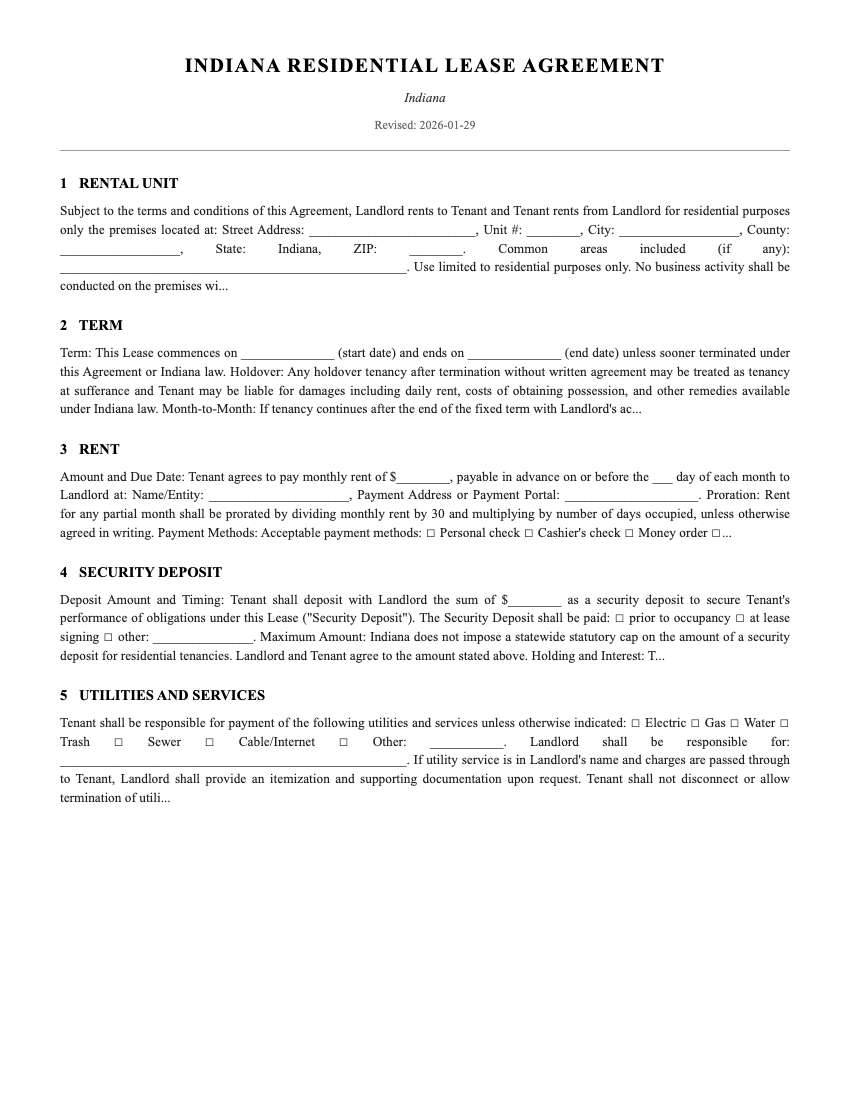
- Lease term options: fixed-term and month-to-month provisions
- Rent amount, due date, late fee provisions (consistent with Indiana rules and anti-usury laws)
- Security deposit clause with itemization requirement and return timeline (template uses a 45-day return/itemization practice consistent with Indiana practice; parties may modify if local ordinance differs)
- Utilities and services allocation
- Maintenance and repair responsibilities; habitability and required disclosures
- Entry and notice for access (reasonable notice for repairs or inspections)
- Default, cure periods, and summary possession/eviction procedure steps
- Early termination and subletting rules
- Required disclosures: Lead-Based Paint Addendum (if built before 1978); Indiana Sex & Violent Offender Registry notice; known material defects/habitability disclosure
- Move-in/move-out inspection checklist guidance and signature blocks
- Optional addenda: pet addendum, parking, smoking policy, lead paint, roommate addendum
Related Lease Agreement Templates
Download Options
- PDF (ready-to-sign): /downloads/indiana-lease-agreement-2026.pdf
- Fillable Word/DOCX (editable): included with the download package
- Single-page summary: highlights key tenant rights and landlord obligations for quick reference
Choose the format that fits your workflow. If you plan to edit the lease, use the DOCX; if you only need to print and sign, use the PDF.
How to Finalize Your Lease
- Customize the template fields: names, property address, rent amount, due date, term, and any special provisions.
- Attach required disclosures: completed Lead-Based Paint Disclosure (if applicable), Indiana Sex & Violent Offender Registry notice, and the known material defects/habitability statement.
- Conduct and document a move-in condition inspection with photographs and a signed checklist.
- Collect the security deposit and first month's rent; provide a written receipt and store deposit funds per your chosen method. Document whether the deposit will be kept in a non-interest or interest-bearing account.
- Signatures: ensure all adult tenants listed sign and date the lease. Provide each party a fully executed copy.
- Run the AI contract review tool safety check: upload the signed or draft lease to an AI contract review tool for a contract review that flags statutory conflicts, missing disclosures, and ambiguous clauses. Correct any issues identified before relying on the lease in a dispute.
Additional Practical Tips
- Local ordinances: confirm city or county licensing, registration, or safety inspection requirements (e.g., landlord registration programs in some Indiana cities).
- Receipts and notices: deliver termination and cure notices in writing and keep proof of delivery (hand-delivery with signed receipt, certified mail, or other verifiable method).
- Security deposit accounting: the template requires a written itemization of deductions; attach invoices or receipts for repairs whenever possible.
- Consult counsel: when in doubt about complex situations—security deposit disputes, hostile holds-over, repairs affecting habitability, or large damages—seek local counsel familiar with Indiana summary possession practice.
When to Update This Lease
- Change in local law or municipal ordinance
- New mandatory disclosures or federal rule changes (for example, HUD or EPA guidance)
- Significant repairs or habitability issues affecting multiple units
- Changes in ownership or property management
Closing
This lease template is designed to reflect Indiana statutory structure (Indiana Code Title 32, Article 31) and common practice. Use an AI contract review tool to verify your final document and consult a local attorney for complex or contested situations.
<div class="ml-embedded" data-form="bBZ9zR"></div>
Frequently Asked Questions

About Designer Content
Designer Content creates practical legal document resources for landlords, contractors, and small business owners. We simplify complex legal concepts into actionable guidance. Connect with us on LinkedIn.