
Wisconsin Residential Lease Agreement — Why compliance matters
Using a lease that reflects Wisconsin law reduces the risk of disputes, improper withholding of security deposits, and defective eviction notices. Wisconsin landlord-tenant relations are governed primarily by Wis. Stat. ch. 704 (Landlord and Tenant) and summary eviction procedure is handled under Wis. Stat. ch. 799. This template is written to align with those statutes and common municipal requirements, and includes the federal lead-based paint disclosure required by 42 U.S.C. § 4852d for pre-1978 housing.
This article explains key Wisconsin rules you must follow, what the downloadable lease includes, and how to finalize and verify your lease using an AI contract review tool for contract analysis.
For a comprehensive lease review checklist covering residential and commercial terms, see our Lease Agreement Review Guide.
Definition: What is a Wisconsin residential lease?
A residential lease in Wisconsin is a written contract between a landlord and resident that establishes the term of occupancy, rent, security deposit handling, responsibilities for repairs, required disclosures, and termination procedures consistent with Wis. Stat. ch. 704 and any applicable municipal ordinances. A valid lease must not conflict with state statutes (e.g., rental-damage rules) or federal disclosure requirements (e.g., lead-based paint for properties built before 1978).
Why Old Templates Are Dangerous (Wisconsin-specific traps)
- Outdated security deposit language: Wisconsin requires landlords to provide accounting and return remaining deposit per Wis. Stat. ch. 704 and local rules. Old forms may use incorrect timelines or omit the itemized statement requirement.
- Wrong eviction procedure citations: Eviction in Wisconsin follows summary procedures in Wis. Stat. ch. 799. Using eviction language from another state risks defective notices or unlawful lockouts.
- Missing federal disclosures: Properties built before 1978 require the federal lead-based paint disclosure (42 U.S.C. § 4852d). Failure to include it can create liability and affect eviction remedies.
- Incorrect notice periods: Month-to-month tenancies in Wisconsin commonly use 28 days’ notice, but templates may specify 30 days or incorrect effective dates; that can invalidate termination notices.
- Local ordinance conflicts: Municipalities may regulate local inspection certificates, smoke/CO device requirements, escrow handling of deposits, or provide additional tenant protections. Old statewide templates often miss municipal requirements.
What's Included in This Template
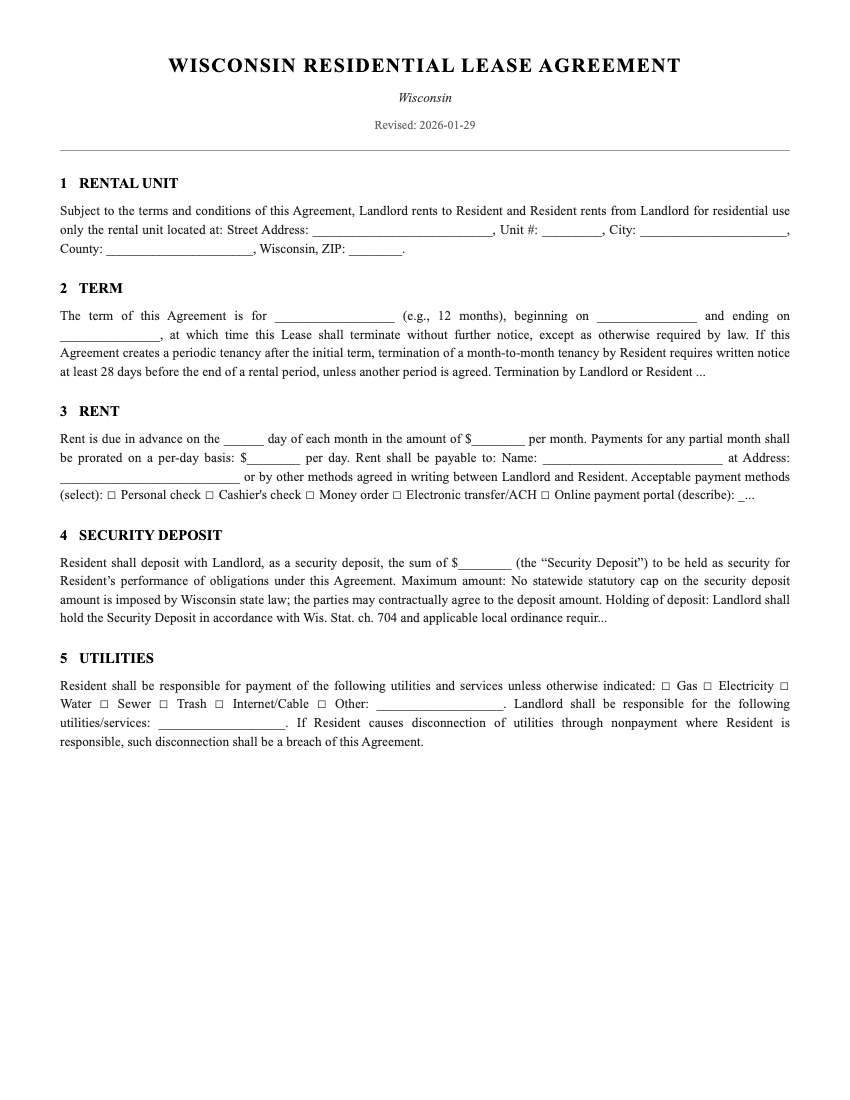
- Parties, property description, and lease term (fixed term and periodic options).
- Rent amount, due date, late fees (written to comply with state rules), and permissible rent-increase language for periodic tenancies.
- Security deposit clause with itemization requirement and return procedure consistent with Wis. Stat. ch. 704 and municipal variations.
- Maintenance and repair responsibilities; access and entry notice language aligned with Wisconsin law.
- Required disclosures: lead-based paint (federal), security deposit accounting, sex-offender registry notice, flood/hazard advisory, and smoke/CO detector notice.
- Termination and eviction language referencing Wis. Stat. ch. 799 summary procedures, cure periods for violations, and common 28-day notice for monthly tenancies.
- Utilities allocation, pets and guest rules, subletting and assignment provisions.
- Move-in/move-out condition checklist and signature blocks.
- Optional addenda: pet addendum, lead-based paint disclosure form, move-in inspection form, and local municipality compliance checklist.
Download Options
- PDF (print-ready): /downloads/wisconsin-lease-agreement-2026.pdf
- Editable DOCX: Available on request—contact support to receive a version you can edit in Word or Google Docs.
- Fillable form: Copy the template into a form tool (recommended if you manage many units).
How to Finalize Your Lease
- Review statutory requirements: Cross-check lease terms against Wis. Stat. ch. 704 and Wis. Stat. ch. 799.
- Complete property- and tenant-specific fields: rent, deposit amount, names, term dates, and utility responsibilities.
- Attach required disclosures and addenda: lead-based paint form (if applicable), smoke/CO notice, sex-offender registry notice, flood/hazard advisory, and security deposit account provision.
- Run the lease through an AI contract review tool for clause review and municipal conflict checks.
- Make any necessary edits and obtain signatures from all parties; keep originals for at least the statute of limitations period (see Wis. Stat. § 893.43 for contract limitations).
- Provide tenant with copies and, after move-out, provide an itemized security-deposit statement and return any remaining funds within the timeframe required by Wis. Stat. ch. 704 and applicable local ordinance.
Practical tips for landlords and tenants
- Landlords: Keep thorough move-in/out checklists and photos; those records are critical for security deposit disputes.
- Tenants: Request and keep copies of all disclosures and the move-in condition report; ask for clarification about local inspection certificates and smoke/CO device compliance.
- Both: If your property is in a Wisconsin municipality, check local code enforcement or municipal housing department rules—some cities impose inspection, escrow, or registration requirements.
Related Lease Agreement Templates
Frequently Asked Questions
(See the FAQ section below for full answers to common Wisconsin-specific questions.)
Sources and further reading
Refer to the statutes and federal guidance listed in the Sources section below. These are primary authorities for Wisconsin lease drafting.
Final note
A well-drafted lease reduces conflict and creates predictable outcomes. Use this Wisconsin-specific template, attach all required disclosures, and verify with an AI contract review tool to ensure your document reflects current Wisconsin law and local requirements.
<div class="ml-embedded" data-form="bBZ9zR"></div>
Frequently Asked Questions

About Designer Content
Designer Content creates practical legal document resources for landlords, contractors, and small business owners. We simplify complex legal concepts into actionable guidance. Connect with us on LinkedIn.