
Introduction
Creating a valid residential lease in Minnesota requires more than filling in names and dates. Minnesota landlord-tenant law is governed primarily by Minn. Stat. ch. 504B (Landlord and Tenant) and is supplemented by state data-practices rules and federal disclosure laws. This template is tailored to Minnesota: it explains how to handle security deposits (itemization and a 21-day return requirement after termination and delivery of possession), required disclosures (lead-based paint for pre-1978 housing, smoke/carbon monoxide detectors, manager/agent information, and tenant data notices), and the notice rules common to nonpayment, lease violations, and periodic tenancies.
Using a Minnesota-specific lease reduces the risk of costly procedural mistakes in eviction or deposit disputes. Local ordinances may add requirements (for example, city-level tenant protections or deposit rules). Always check local law where the rental property is located.
For a comprehensive lease review checklist covering residential and commercial terms, see our Lease Agreement Review Guide.
What is a Minnesota residential lease?
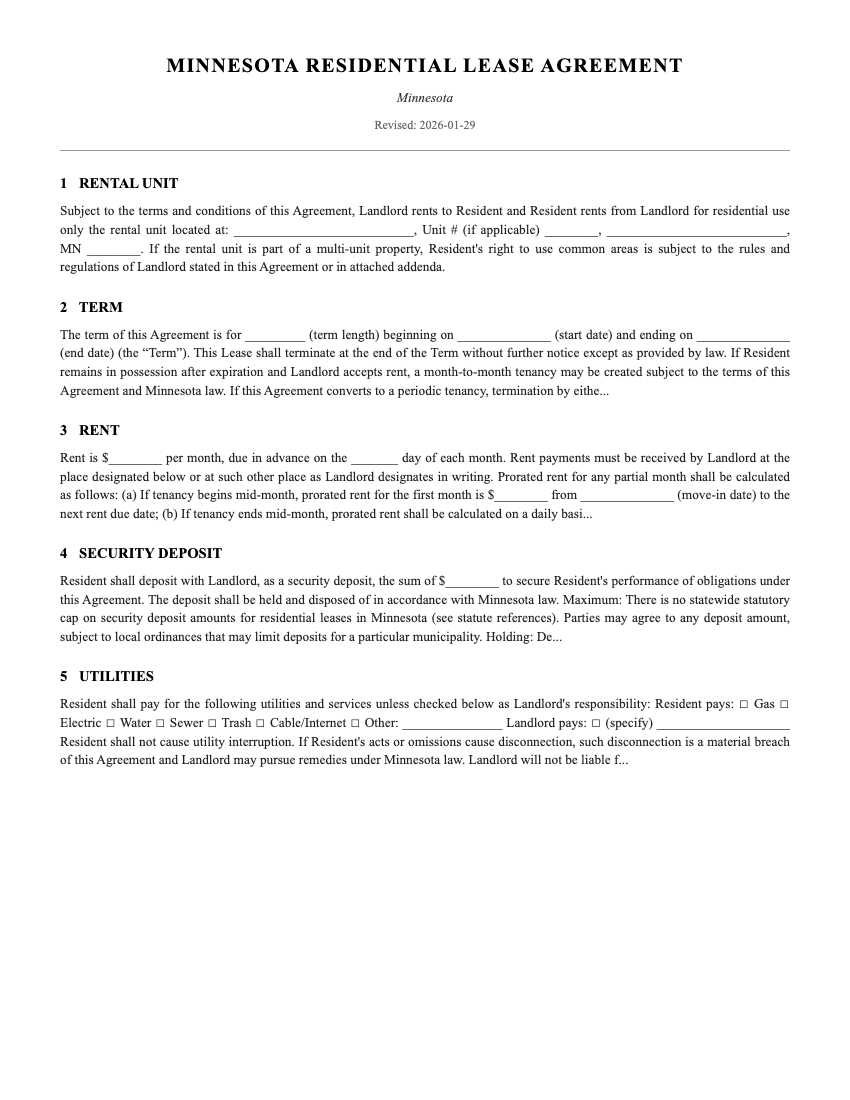
A residential lease under Minnesota law (Minn. Stat. ch. 504B) is a written contract that sets the terms of a landlord–tenant relationship for dwelling units in Minnesota. It identifies parties, rent and payment terms, security deposit handling, permitted uses and occupants, required disclosures, notice and termination procedures, maintenance responsibilities, and other terms that govern possession and eviction under state law.
Required Minnesota Legal Elements (At a Glance)
- Governing law reference: Minn. Stat. ch. 504B (Landlord and Tenant).
- Security-deposit handling: no statewide dollar cap, but landlord must return deposit or itemized statement and balance within 21 calendar days after termination and delivery of possession (Minn. Stat. ch. 504B).
- Required disclosures: lead-based paint (federal 42 U.S.C. § 4852d), smoke and carbon monoxide detector statement, manager/agent contact, security-deposit handling statement, and data-privacy/consumer notice (Minn. Stat. ch. 13 and Minnesota Consumer Data Privacy Act context).
- Notice periods: nonpayment and many breach notices commonly 14 days to pay or vacate/cure unless statute or lease specifies otherwise; month-to-month terminations commonly 30 days (consult Minn. Stat. ch. 504B for exact rules by tenancy interval).
- Eviction procedure: landlord must comply with statutory notice and possessory action procedures before filing in court—see Minn. Stat. ch. 504B and Minnesota Judicial Branch resources.
Why Old Templates Are Dangerous (Minnesota-specific traps)
- Missing or incorrect security-deposit procedure: Minnesota requires an itemized statement and timely return (21 days after termination and delivery of possession). Old forms often omit the itemized-statement language or use a different return deadline, exposing landlords to statutory remedies and tenant claims under Minn. Stat. ch. 504B.
- Out-of-state boilerplate: Many generic leases include laws from other states (wrong notice periods, different deposit rules, required interest payments). Minnesota does not require interest on deposits statewide — an incorrect interest clause can cause confusion or litigation.
- Absent local ordinance compliance: Cities may have additional tenant protections (e.g., tenant right-to-counsel pilot programs, local registration, or stronger notice requirements). An old template won't catch these local nuances.
- Incomplete disclosures: Federal lead-based paint rules (42 U.S.C. § 4852d) and Minnesota data-practices obligations must be expressly addressed. Failure to provide these disclosures can create legal exposure and delay enforcement.
- Improper eviction language: Templates that omit Minnesota statutory notice periods or include expedited eviction procedures (not permitted under Minn. Stat. ch. 504B) can result in dismissed cases and sanctions.
What's Included in This Template
- Parties, premises, and term (fixed-term and month-to-month options).
- Rent amount, due date, late fees (if lawful), and accepted payment methods.
- Security deposit clause with itemization requirement and 21-day return timeline (Minn. Stat. ch. 504B).
- Utilities and services allocation.
- Maintenance and repair responsibilities (landlord habitability duties and tenant obligations).
- Authorized occupants, guest/sublease policy, and procedures for adding occupants.
- Required disclosures: lead-based paint (for units built before 1978), smoke/carbon monoxide detector statement, manager/agent contact, security deposit handling statement, and data-privacy notice consistent with Minn. Stat. ch. 13 and recent state privacy developments.
- Notice provisions and statutory eviction references (Minn. Stat. ch. 504B).
- Default and remedies, including cure periods consistent with Minnesota norms (e.g., 14-day notices where appropriate).
- Optional clauses: pet addendum, parking rules, RU/HOA compliance, and early termination options (with legally compliant buy-out language).
Download Options
- One-page Quick Rent-By-Month Addendum — for month-to-month tenancies.
- Full Minnesota Residential Lease Agreement (PDF): /downloads/minnesota-lease-agreement-2026.pdf
- Editable DOCX copy — for customization before final review (recommended to use an AI contract review tool or a local attorney after edits).
How to Finalize Your Lease
- Complete the template fields: fill parties, dates, rent, deposit amounts, and any optional clauses chosen.
- Attach required disclosures: lead-based paint form (if applicable), smoke/CO detector statement, manager/agent contact, security-deposit handling notice, and a tenant data-privacy notice.
- Verify local rules: check city or county tenant-protection ordinances and any property-specific program requirements (subsidy, registration, or licensing).
- Run the finalized draft through an AI contract review tool for clause-level verification and to detect missing Minnesota-specific language.
- Sign and execute: have both parties sign and date the lease; retain originals and provide tenants with a copy.
- Deliver possession and follow move-in protocols: document condition with a checklist and photos; provide receipts for security deposit and disclosures.
Practical Notes on Enforcement and Notices
- Nonpayment: typically a 14-day notice to pay or vacate is used before filing for possession, consistent with Minn. Stat. ch. 504B procedures—but confirm statutory deadlines for the specific facts of your case.
- Cure/terminate for breach: many lease breaches use a 14-day cure period; serious or incurable breaches may permit immediate termination depending on statute and facts.
- Month-to-month termination: commonly 30 days' written notice for a monthly tenancy; review Minn. Stat. ch. 504B for tenancy-interval specifics.
Related Lease Agreement Templates
Frequently Asked Questions
(See the FAQ section below for concise jurisdiction-specific answers.)
<div class="ml-embedded" data-form="bBZ9zR"></div>
Frequently Asked Questions

About Designer Content
Designer Content creates practical legal document resources for landlords, contractors, and small business owners. We simplify complex legal concepts into actionable guidance. Connect with us on LinkedIn.