
Introduction — why a compliant lease matters
A valid residential lease in Australia must follow both national rules (for privacy and consumer protections) and the specific Residential Tenancies Act and bond authority procedures that apply in the state or territory where the property is located. Using an up‑to‑date, state-aware template reduces the risk of invalid termination notices, unlawful bond retention, or penalties for failing to lodge a bond. This template provides a structured, practical lease designed around common Australian tenancy rules (bond caps, condition reports, required disclosures, and rent-increase notice requirements). Before signing, localise the form to the correct state/territory Act and consider an expert review.
What is an Australia residential lease?
A residential lease (tenancy agreement) in Australia is a contract between a landlord (or their agent) and a tenant that sets the rights and obligations for renting a dwelling. Tenancy law is regulated primarily at the state and territory level (for example, the Residential Tenancies Act 2010 (NSW) or the Residential Tenancies Act 1997 (Vic)). Key features commonly required across jurisdictions include lodgement of a bond with a state bond authority (usually capped at four weeks' rent for standard tenancies), move‑in/move‑out condition reports, prescribed notice periods for rent increases and terminations, and statutory disclosure obligations (asbestos, pool safety, smoke alarms, known material defects).
For a comprehensive lease review checklist covering residential and commercial terms, see our Lease Agreement Review Guide.
Why old templates are dangerous (Australia-specific traps)
- Band‑generic terms ignore state differences: Residential tenancy law is state/territory-based. A clause valid in Victoria may be invalid in NSW, Queensland or WA (for example, notice periods, bond caps, and permitted rent-increase frequency differ).
- Bond lodgement mistakes: Failing to lodge a bond with the state bond authority (or lodging incorrectly) can expose landlords to tribunal orders for repayment, penalties and interest. Most jurisdictions cap standard bonds at four weeks' rent—older templates sometimes fail to account for furnished-property exceptions or high-rent thresholds.
- Incorrect termination clauses: Many jurisdictions limit or prohibit no‑ground (no‑reason) evictions, or have recently introduced ‘just cause’ protections. Old leases that permit immediate or short-notice no-reason terminations may be unenforceable.
- Missing statutory disclosures: Failing to disclose known asbestos, pool safety compliance, smoke alarm status, or material defects can lead to tribunal orders, compensation claims and fines.
- Out-of-date rent‑increase language: Most states restrict the frequency of rent increases (commonly once every 12 months) and require written notice in a prescribed form. An old template may not reflect current notice wording or timing requirements.
What's included in this template
- State-aware header and clause placeholders so you can insert the applicable Residential Tenancies Act citation and bond authority details.
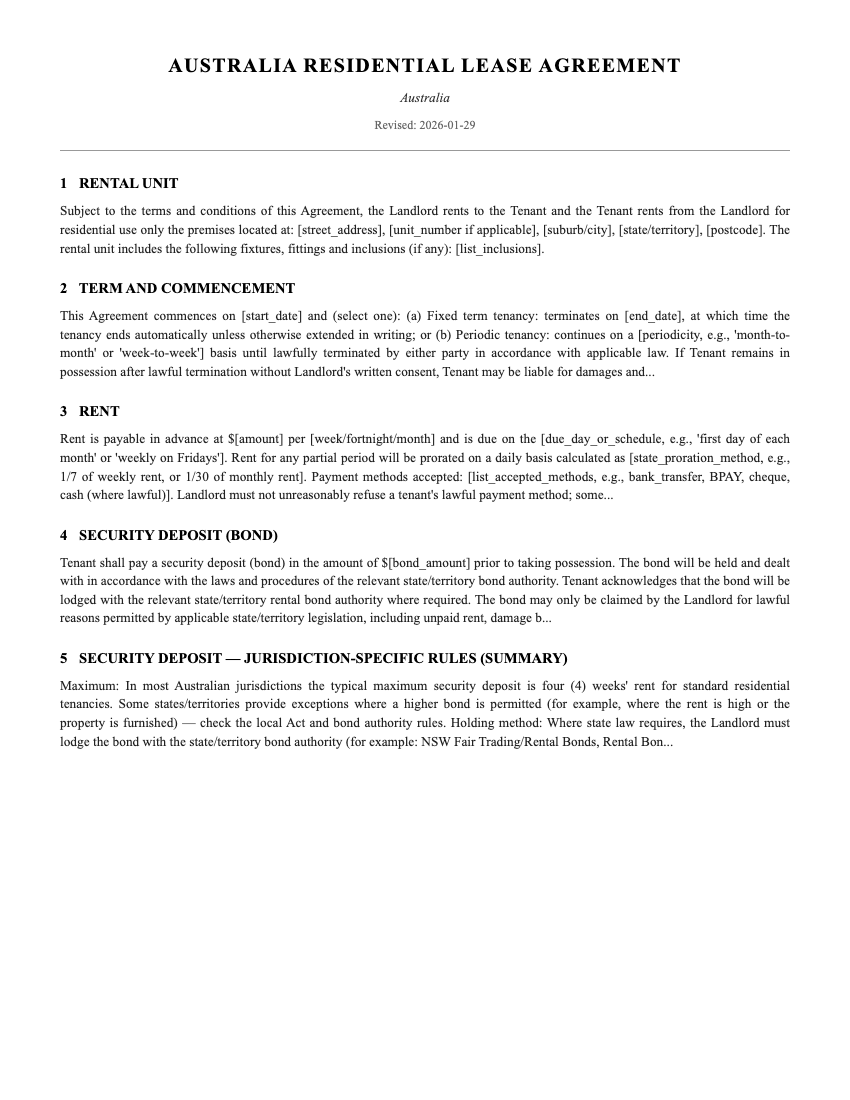
- Bond/security deposit clause consistent with the common four-weeks cap and instructions to lodge the bond with the relevant bond authority.
- Rent, payment method and rent-increase clause with a default 12‑month minimum frequency and written notice procedure (localise to the specific Act’s notice period).
- Condition report protocol for move‑in and move‑out, plus an inspection and maintenance schedule.
- Statutory disclosure checklist: asbestos, material facts, pool safety compliance, smoke alarms, and lead‑based paint caution where applicable.
- Repairs, urgent repairs, and emergency contact procedures aligned to common statutory definitions (localise to your jurisdiction’s definitions of urgent repairs).
- Termination and eviction clause templates (notice periods for rent arrears, breach, end-of-term, and no‑ground notices—must be finalised according to the local Act).
- Privacy and data‑handling clause referencing the Privacy Act 1988 (Cth) and tenant consent for necessary checks.
- Optional pet, subletting and guest provisions with spaces to specify any local registration or council requirements.
Related Lease Agreement Templates
Download Options
- Single-property PDF (editable fillable fields): /downloads/australia-lease-agreement-2026.pdf
- Bundled package: includes condition report template, bond lodgement instructions for major jurisdictions (NSW, VIC, QLD, WA, SA, TAS, ACT, NT), and an annotated clause guide — available on request.
How to Finalize Your Lease
- Select the correct state/territory version and insert the name of the applicable Residential Tenancies Act and the local bond authority contact details.
- Complete property-specific details (rent amount, payment schedule, bond amount, included fixtures/furnishings). Ensure the bond does not exceed the state cap unless an exception applies and you have verified that exception with the bond authority.
- Conduct a comprehensive move‑in condition report with the tenant and attach it to the lease as a schedule.
- Obtain signed copies from both parties and lodge the bond (where required) with the state's bond authority within the statutory time limit.
- Run the completed lease through an AI contract review tool for a compliance check and to flag jurisdictional inconsistencies.
- If an AI contract review tool flags issues or if you are unsure about specific clauses, consult a local tenancy lawyer or your state/territory consumer affairs office before commencing the tenancy.
Required Disclosures (check and include as applicable)
- Move‑in/move‑out condition report (mandatory in most jurisdictions).
- Known asbestos on the premises (where applicable) and its location/condition.
- Material facts that would affect the tenant’s decision (flooding history, structural defects, active pest infestations known to the landlord).
- Pool safety compliance (current certificates/inspections where required by state law).
- Smoke alarm compliance (state rules specify type and placement; include evidence of working alarms).
- Lead-based paint caution where relevant (older properties) and any known lead hazards.
State and Territory Notes (summary — always check the local Act)
- Bond caps: commonly up to four weeks' rent in most jurisdictions; check the local bond authority for exceptions.
- Rent increases: typically limited to once every 12 months with written notice; specific notice periods and forms vary by state/territory.
- Termination: notice periods for breach, nonpayment and end-of-term vary; some jurisdictions have tightened no‑ground terminations or introduced statutory grounds.
- Eviction procedures: must follow the process set out in the local Residential Tenancies Act and tribunal practice; unlawful lockouts and retaliatory evictions are prohibited.
Final checklist before you sign
- Localise to the correct Residential Tenancies Act and bond authority.
- Attach the completed condition report.
- Confirm bond lodgement procedure and obtain tenant consent for any required checks under the Privacy Act 1988.
- Use an AI contract review tool to scan the final agreement and remedy flagged issues.
- Keep dated copies for both parties and lodge any required notices with the tribunal/body where required by law.
<div class="ml-embedded" data-form="bBZ9zR"></div>
Frequently Asked Questions

About Designer Content
Designer Content creates practical legal document resources for landlords, contractors, and small business owners. We simplify complex legal concepts into actionable guidance. Connect with us on LinkedIn.