
Introduction
Creating a legally compliant residential lease in Ireland requires more than filling in names and dates. The Residential Tenancies Act 2004 (as amended) and the Residential Tenancies Board (RTB) set the rules for notice periods, grounds for termination, deposit handling and rent increase limits in Rent Pressure Zones (RPZs). Failure to include statutory disclosures (BER certificate, smoke/CO detector confirmation, data-protection notice), or to follow RTB procedures, can lead to disputes, delays and financial penalties.
This template adapts standard lease terms to Irish law: it explicitly covers security deposits (no statutory cap but itemisation required on deductions), RPZ rent increase controls, RTB registration and dispute resolution, landlord repair and safety obligations, and required tenant disclosures. Use it as a foundation, then verify the final form against local RTB guidance and, where necessary, consult a solicitor.
For a comprehensive lease review checklist covering residential and commercial terms, see our Lease Agreement Review Guide.
What is an Ireland residential lease?
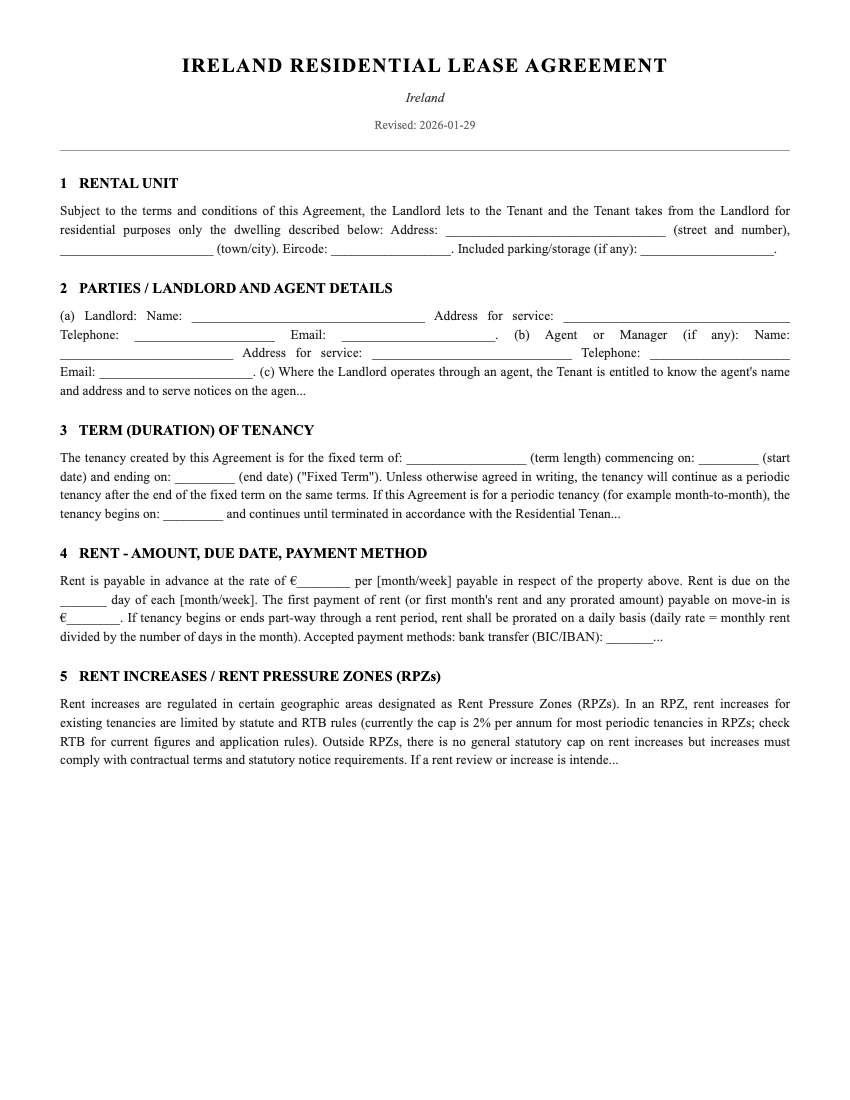
A residential lease (tenancy agreement) in Ireland is a contract between a landlord and tenant that sets out the rights and obligations of each party for the occupation of a dwelling. It must be used in conjunction with obligations under the Residential Tenancies Act 2004 and RTB procedures, and should include required disclosures such as the Building Energy Rating (BER) certificate, confirmation of smoke and carbon monoxide detectors, a data-protection/privacy notice, and any known hazards.
Why Old Templates Are Dangerous (Ireland-specific traps)
- Rent Pressure Zones (RPZs): An old template may not reference RPZ limits or exemptions. Landlords must check if the property sits in an RPZ and follow statutory restrictions on annual rent increases for existing tenancies. Failure to comply can lead to RTB complaints and orders to reverse increases.
- Deposit handling: While there is no statutory deposit cap, Ireland requires landlords to provide an itemised statement for deductions and to return deposits promptly on lawful termination. Older forms sometimes omit itemisation or RTB dispute procedures.
- RTB registration: All private tenancies must be registered with the RTB and the registration fee paid. An unregistered tenancy can limit remedies in disputes and lead to penalties. Old templates may not prompt registration or include the RTB tenancy reference.
- Safety and energy rules: Templates that do not require a BER certificate, working smoke/CO alarms, and basic safety standards open landlords to enforcement action and weaken their position in disputes.
- Data protection (GDPR): Historic forms often collect tenant data without an explicit privacy notice or lawful basis. Under Irish data-protection rules (Data Protection Act and GDPR), landlords must inform tenants how their personal data will be used and stored.
What's Included in This Template
- Parties, premises description and permitted use
- Term (fixed term or periodic) and start/end dates
- Rent: amount, payment method, due date, and RPZ-compliant rent-increase clause
- Security deposit clause: agreed amount, itemisation requirement for deductions, return procedure and RTB dispute referral language
- Maintenance and repair obligations; minimum standards for rented houses (safety, repair, hygiene)
- Safety and compliance clauses: BER certificate disclosure, smoke and CO alarm confirmation, gas/electrical advisory and safety statement
- Utilities and services allocation (who pays water, electricity, waste, broadband)
- Access and inspection rights with notice requirements
- Notice and termination clauses aligned with RTB forms and statutory grounds for ending a tenancy
- Subletting, assignment and guest policy (consent conditions)
- Data protection (privacy) notice consistent with GDPR principles
- Dispute resolution clause: RTB as primary forum and steps before application
- Signature block and schedule for disclosures (BER number, detector checks, known hazards)
Required Disclosures (included as statutory schedule)
- Building Energy Rating (BER) certificate details and copy or reference to where it can be inspected.
- Confirmation of presence and working order of smoke and carbon monoxide detectors.
- Advisory/disclosure relating to gas and electrical safety checks (and evidence where applicable).
- Data protection (privacy) notice explaining how tenant personal data will be used, retained and their rights (DPC/GDPR compliance).
- Advisory on known hazards: lead, damp/mould, asbestos, flooding or other known risks affecting the property.
Related Lease Agreement Templates
Download Options
- Instant PDF (fillable): /downloads/ireland-lease-agreement-2026.pdf
- Editable Word (.docx) — for customisation before final review (use an AI contract review tool to scan for compliance after edits)
- Step-by-step fillable web form (recommended for first-time landlords)
How to Finalize Your Lease
- Confirm the property's RPZ status using the RTB website and local authority information; adjust the rent-increase clause accordingly.
- Complete the template with accurate BER number, detector checks and any known-hazard disclosures.
- Agree deposit amount and ensure the deposit clause requires an itemised statement for deductions and references RTB dispute procedures.
- Register the tenancy with the RTB and obtain the RTB tenancy reference number (registration is a statutory requirement).
- Exchange signed copies with the tenant; keep originals for your records and provide the tenant with a copy of the BER and the completed data-protection notice.
- Upload the signed lease to an AI contract review tool for a final automated safety and compliance check; address any flagged issues before tenancy commencement.
Practical Notes on Eviction and Notice
- Evictions and terminations are regulated by the Residential Tenancies Act 2004 and RTB procedures. Landlords must rely on statutory grounds (for example, landlord’s own occupation, sale, substantial refurbishment, rent arrears or breach) and follow prescribed notice periods and RTB forms. RTB’s "Ending a tenancy" guidance explains required steps and timelines.
- Typical tenant notice for a monthly periodic tenancy is 28 days, but landlord notice periods and permitted grounds depend on the length of the tenancy and reason. Always use RTB-prescribed notice forms and keep records.
- If parties cannot agree on deposit deductions or other disputes, either can apply to the RTB for determination. The RTB handles fast-track cases for deposit disputes and provides mediation and adjudication services.
Final Reminders
- This template is drafted to align with the Residential Tenancies Act 2004 and RTB guidance as at publication. Laws and RTB rules (including RPZ designations and allowable increase percentages) change — check the RTB and the Irish Statute Book before finalising.
- Use an AI contract review tool to scan the completed document for inconsistent language or missing jurisdictional clauses, and consult a solicitor for complex situations (large deposits, non-standard tenancy arrangements, significant refurbishments or litigation risks).
<div class="ml-embedded" data-form="bBZ9zR"></div>
Frequently Asked Questions

About Designer Content
Designer Content creates practical legal document resources for landlords, contractors, and small business owners. We simplify complex legal concepts into actionable guidance. Connect with us on LinkedIn.