
What Is a Delaware MSA?
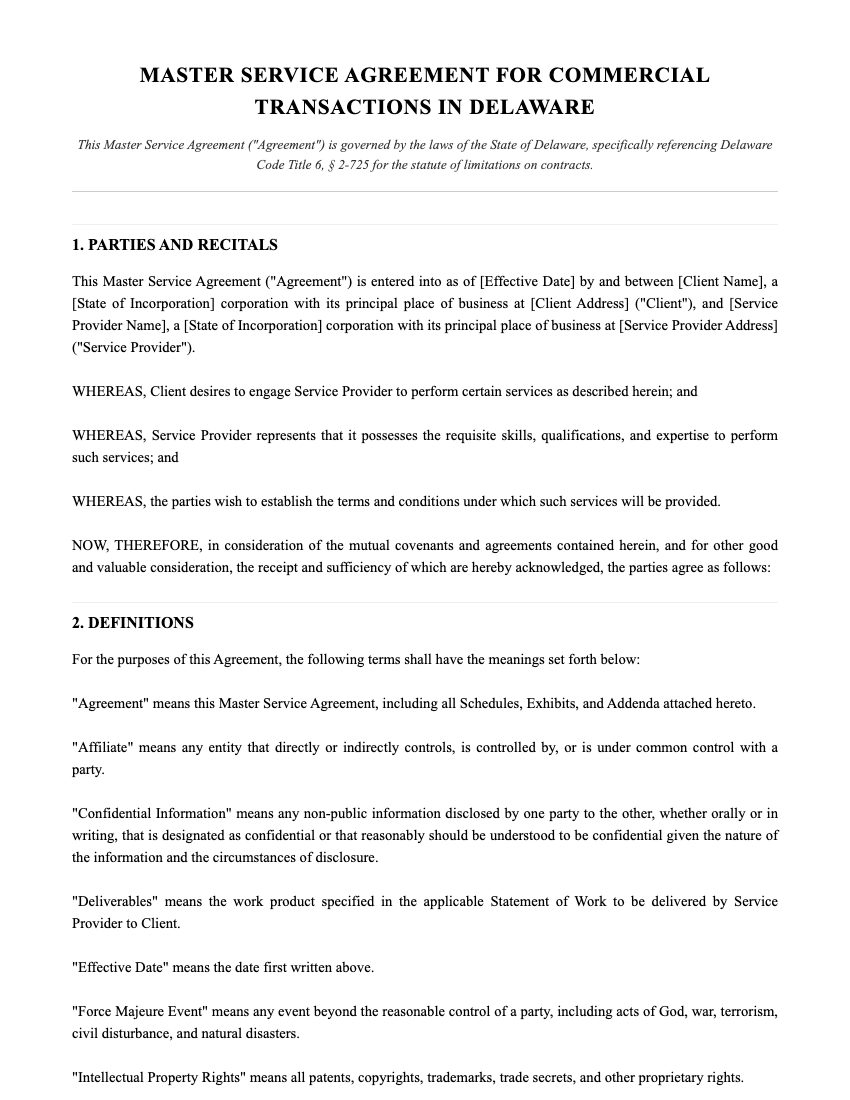
A Delaware Master Services Agreement (MSA) is a comprehensive contract used by businesses to establish the foundational terms for all future engagements with clients or service providers. This agreement simplifies the contracting process by allowing parties to execute specific Statements of Work (SOWs) for individual projects without renegotiating the entire agreement each time.
For a comprehensive guide to structuring MSAs and SOWs that protect your business, see our Freelancer Contracts Guide.
Definition
Definition: A Delaware Master Services Agreement is a contract between two parties, typically a client and a service provider, that outlines the overarching legal terms—such as payment, liability, intellectual property, and dispute resolution—that apply to all future projects. This framework allows for the use of simple "Statements of Work" (SOWs) for individual tasks, streamlining the contracting process.
Why You Cannot Use a Generic MSA in Delaware
Delaware's legal landscape is unique, and using a generic MSA template can expose businesses to unnecessary risks. It's crucial to tailor your MSA to comply with Delaware-specific laws to avoid potential legal pitfalls.
Worker Classification Rules
Delaware uses the common law test to determine worker classification, focusing on the degree of control a business has over the worker. This test is similar to the federal IRS guidelines. Misclassification can lead to severe penalties, including back taxes, fines, and liability for unpaid benefits. Under Delaware Code Title 6, § 2-725, businesses have a three-year statute of limitations for contracts, which can impact claims related to misclassification.
Non-Compete Enforceability
Non-compete clauses are generally enforceable in Delaware, provided they are reasonable in scope, duration, and geography. According to Delaware Code Title 6, § 2301(a), these clauses must protect legitimate business interests without imposing undue hardship on the employee. Courts will assess factors such as the nature of the business and the employee's role to determine enforceability. Alternatives to non-competes include confidentiality agreements and non-solicitation clauses, which can offer protection without the same level of restriction.
IP/Work-for-Hire Considerations
Delaware law allows for clear IP assignment and work-made-for-hire provisions, which are crucial for protecting intellectual property rights. Businesses should ensure that their MSA includes specific language assigning IP rights to the client, especially for creative or technical work. This is critical to avoid disputes over ownership of work products.
What's Included in This Template
Flexible SOW Structure
The MSA template includes a flexible Statement of Work (SOW) structure, allowing parties to define specific deliverables, timelines, and payment terms for each project.
Delaware-Specific Indemnification
Indemnification clauses are tailored to Delaware's legal standards, providing mutual protection against claims arising from negligence or misconduct.
Dispute Resolution and Venue
The template specifies that disputes will be resolved through the Delaware Court of Chancery, known for its expertise in business law.
- Statutory interest rate for late payments per Delaware Code Title 6, § 2301(a)
- Data protection compliance under Delaware Code Title 6, § 12B-101 et seq.
- Waiver of unknown claims per Delaware Code Title 6, § 2-725
Who Needs This Document?
| User Type | Relationship | Key Benefit |
|---|---|---|
| Creative Agencies | Retainers with corporate clients | Streamlines project approvals and billing |
| Consultants | Long-term advisory roles | Defines scope and additional billing rates |
| Software Developers | Project-based milestones | Protects source code IP until final payment |
| Marketing Freelancers | Multiple client engagements | Ensures compliance with Delaware's contract laws |
How to Use This MSA Template
Step 1: Define the Parties
Clearly identify the legal names and entity types for both the service provider and the client. This ensures clarity and avoids potential disputes.
Step 2: Set the Term
Decide whether the agreement will have a fixed term or will auto-renew. This flexibility allows the MSA to adapt to different business needs.
Step 3: Attach Your First SOW
Use the attached SOW template to outline specific project details, including scope, timeline, and payment terms.
Step 4: Execute the Agreement
Both parties should sign the MSA to formalize the agreement. Future projects will only require signing a new SOW.
Related MSA Templates
Get the Template
Sign up for our newsletter to receive the template.
Frequently Asked Questions

About Designer Content
Designer Content creates practical legal document resources for landlords, contractors, and small business owners. We simplify complex legal concepts into actionable guidance. Connect with us on LinkedIn.