
Introduction
Using a lease that reflects Delaware law protects both landlords and tenants. Delaware follows a common-law approach with broad freedom of contract: parties may negotiate many terms, but statutory rules and judicial procedures (particularly for security deposits and summary possession/eviction) still apply. This template is designed to be Delaware-focused: it addresses deposit handling and itemization, common notice periods for nonpayment and termination, required federal disclosures (lead-based paint), and prompts you to confirm any municipal licensing or local ordinances that may impose additional requirements.
This guide explains what the template includes, common Delaware-specific pitfalls in old forms, how to finalize a lease, and when to consult counsel. For added safety, upload your completed lease to an AI contract review tool for contract analysis and verification before signatures.
For a comprehensive lease review checklist covering residential and commercial terms, see our Lease Agreement Review Guide.
What is a Delaware residential lease?
A Delaware residential lease is a written contract between a landlord and tenant that sets the terms for possession and use of residential property located in Delaware, including the amount and timing of rent, security deposit terms, required disclosures, repairs and habitability obligations, and duration/termination procedures. While parties have wide latitude to negotiate terms, statutory rules and court procedures (including summary possession/ejection) and certain federal disclosures (e.g., lead-based paint for pre-1978 housing) must be observed.
Why Old Templates Are Dangerous (Delaware-specific traps)
- Security deposit mishandling: Delaware does not impose a statewide statutory cap on deposit amounts, but the state and courts require prompt return and an itemized statement of deductions. Old forms that omit an explicit return timeline or accounting procedure invite disputes and potential damages.
- Wrong notice periods: Many older templates use generalized 30/60 day notices. Delaware practice commonly uses short demand/cure periods for nonpayment (often 5 days' demand) and 7 days for curable breaches, and summary possession filing deadlines are strict. Using the wrong notice in your lease can delay or invalidate eviction filings.
- Missing federal disclosures: Any dwelling built before 1978 requires the federal Lead-Based Paint disclosure (Title X). Failing to include the federal disclosure form risks statutory penalties and can affect landlord defenses.
- Municipal rules and licensing: Delaware has no statewide rent control, but municipalities may have licensing, occupancy or health-related disclosure rules (bedbug or floodplain notices). Old statewide templates that ignore local obligations can leave landlords noncompliant with city ordinances.
- Ambiguous guest/sublease rules: Without clear limits on guests and subletting, landlords may find it harder to address unauthorized occupants. Delaware courts generally enforce clear, reasonable lease provisions.
What's Included in This Template
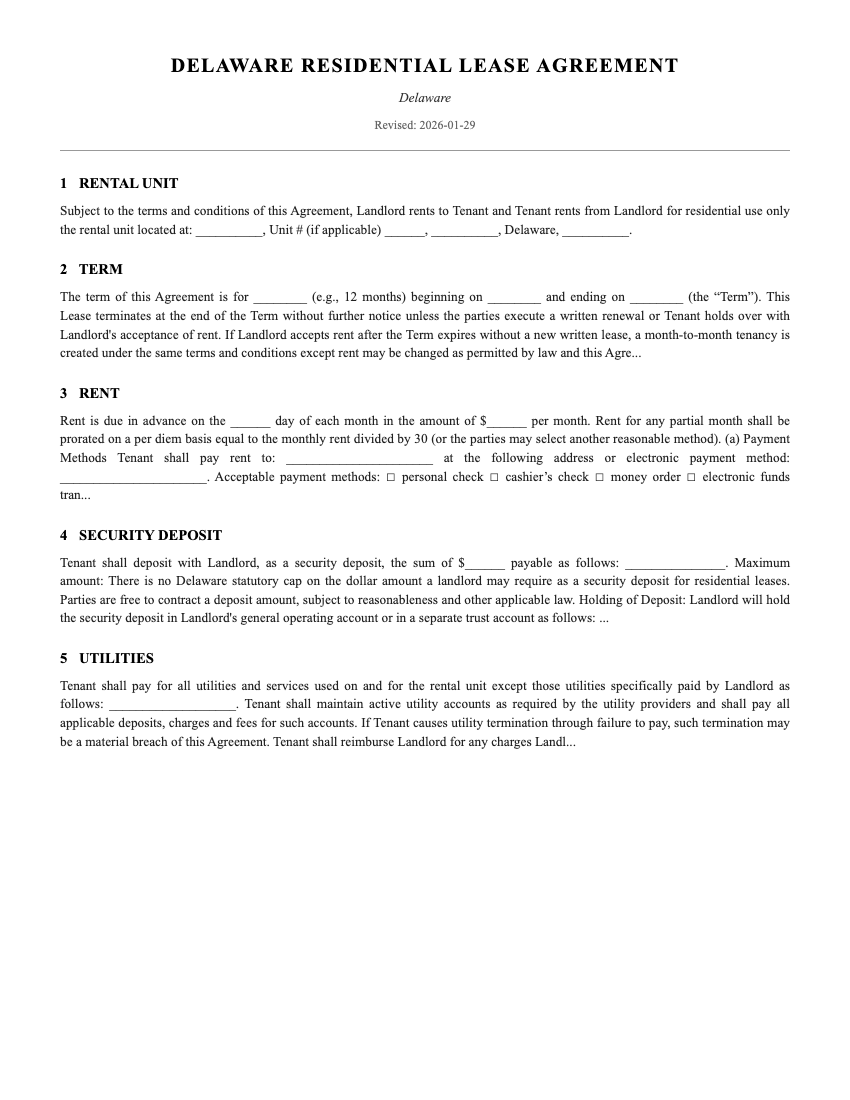
- Basic lease cover page with parties, property address, term start and end dates
- Rent clause: amount, due date, late fees (customizable), and accepted payment methods
- Security deposit clause: deposit amount field, requirement for itemized deductions, suggested return period (editable; commonly 20–30 days) and handling instructions
- Utilities and services: allocated responsibilities for utilities, trash, and common services
- Repairs and habitability: landlord and tenant repair duties consistent with Delaware habitability expectations
- Entry and notice provisions: required notice for landlord entry and tenant notice obligations
- Termination & holdover: procedures for early termination, holdover tenancy, and month-to-month conversion language
- Default and cure periods: suggested Delaware-practice notice periods for nonpayment and breaches
- Required disclosures: federal Lead-Based Paint disclosure (for pre-1978 housing), notice of sex offender registry resource, municipal/local disclosure placeholders, and recommended environmental/flood advisories
- Optional clauses: pet addendum, smoking rules, subletting and assignment restrictions, parking and storage rules
- Signature block for landlord(s), tenant(s), and space for witness or notary if desired
The template includes annotation notes explaining Delaware-specific considerations and prompts to confirm local municipal rules and exact statutory deadlines.
Related Lease Agreement Templates
Download Options
- PDF (print-ready): /downloads/delaware-lease-agreement-2026.pdf
- Fillable DOCX (editable): Available on the download page — use your word processor to customize fields
- Checklist and signature addendum: one-page PDF checklist summarizing required disclosures and documents to attach (lead form, move-in condition report, keys inventory)
How to Finalize Your Lease
- Fill all blanks and choose the desired term (fixed-term or month-to-month) and specific cure/notice windows.
- Attach required disclosures: federal Lead-Based Paint Disclosure (if applicable), sex offender registry notice/link, and any municipal disclosures or licensing information.
- Have parties review and run the completed lease through an AI contract review tool for automated contract checks and risk flags.
- Make any revisions prompted by an AI contract review tool or counsel; ensure all monetary amounts and dates are clear and consistent.
- Signatures: both landlord and tenant should sign and date all pages; consider initialing each page to avoid later claims of alteration.
- Provide tenant with a copy of the fully executed lease, receipt for security deposit, and any move-in inspection report.
For eviction or summary possession matters, preserve written notice records (signed return receipts, email confirmations if agreed) and follow Delaware court filing requirements. When in doubt, consult local counsel before filing.
Additional Notes on Enforcement and Litigation
Delaware summary possession procedures are governed by Delaware statutes and court rules; courts expect compliance with notice and filing rules. Landlords should document service of demand letters and cure notices carefully. Tenants should retain receipts for deposit payments and move-in condition reports to support deposit return claims.
When to Consult an Attorney
- Significant informal modifications requested by tenant (sublease, early termination buyouts)
- Complex habitability or repair disputes
- Large or atypical security deposit arrangements or municipal licensing issues
- Planned eviction or summary possession filing where precise notice timing is critical
an AI contract review tool can identify risk areas, but it is not a substitute for legal advice when litigation or complex statutory questions arise.
<div class="ml-embedded" data-form="bBZ9zR"></div>
Frequently Asked Questions

About Designer Content
Designer Content creates practical legal document resources for landlords, contractors, and small business owners. We simplify complex legal concepts into actionable guidance. Connect with us on LinkedIn.