
Introduction
Using a lease that matches North Carolina law matters. N.C. Gen. Stat. Chapter 42 governs landlord-tenant relationships in North Carolina and sets rules for security deposits, notice requirements, and eviction (summary ejectment) procedures. Federal disclosure laws — for example, residential lead-based paint disclosures for pre-1978 housing — also apply. This template is tailored to North Carolina practices and flags disclosures and clauses that commonly cause disputes.
This guide explains what the template includes, why older or out-of-state forms are risky in North Carolina, and how to finalize a lease that protects both landlord and tenant rights.
For a comprehensive lease review checklist covering residential and commercial terms, see our Lease Agreement Review Guide.
Definition — What is a North Carolina residential lease?
A North Carolina residential lease is a written contract between a landlord and tenant that sets the terms for occupancy of residential premises in North Carolina. It must comply with state statutes governing landlord and tenant rights and remedies (primarily N.C. Gen. Stat. Chapter 42), any applicable federal disclosure law (for example, lead-based paint), and municipal ordinances that may affect security deposits, licensing, or housing standards.
Why Old Templates Are Dangerous (North Carolina traps)
Using an old or out-of-state template can create serious legal exposure in North Carolina. Common pitfalls include:
- Security deposit mishandling. North Carolina requires landlords to account for deductions and follow the disposition rules in Chapter 42. An outdated form may omit required itemization language or contain incorrect timing language for return of deposits.
- Incorrect notice periods. North Carolina follows summary-ejectment procedures under Chapter 42. Using the wrong "pay or quit" or termination notice period can lead to dismissal of an eviction filing.
- Missing required disclosures. Federal lead-based paint rules (24 C.F.R. part 35) apply to pre-1978 housing; state-level sex offender registry notice and other state disclosures must be included when required. An old template may omit these and expose landlords to liability.
- Overreaching penalty clauses. North Carolina courts and Chapter 75 can scrutinize unconscionable or deceptive provisions (e.g., automatic forfeiture of deposit without an itemized statement). Ensure remedies and fee-shifting language match state law.
- Local ordinance conflicts. Municipalities may have landlord registration, inspection, or licensing rules; an out-of-date lease might not include required tenant notices or comply with local limits or processes.
Always tailor the lease to North Carolina law and local rules — and validate the final draft with an AI contract review tool or an attorney.
What's Included in This Template
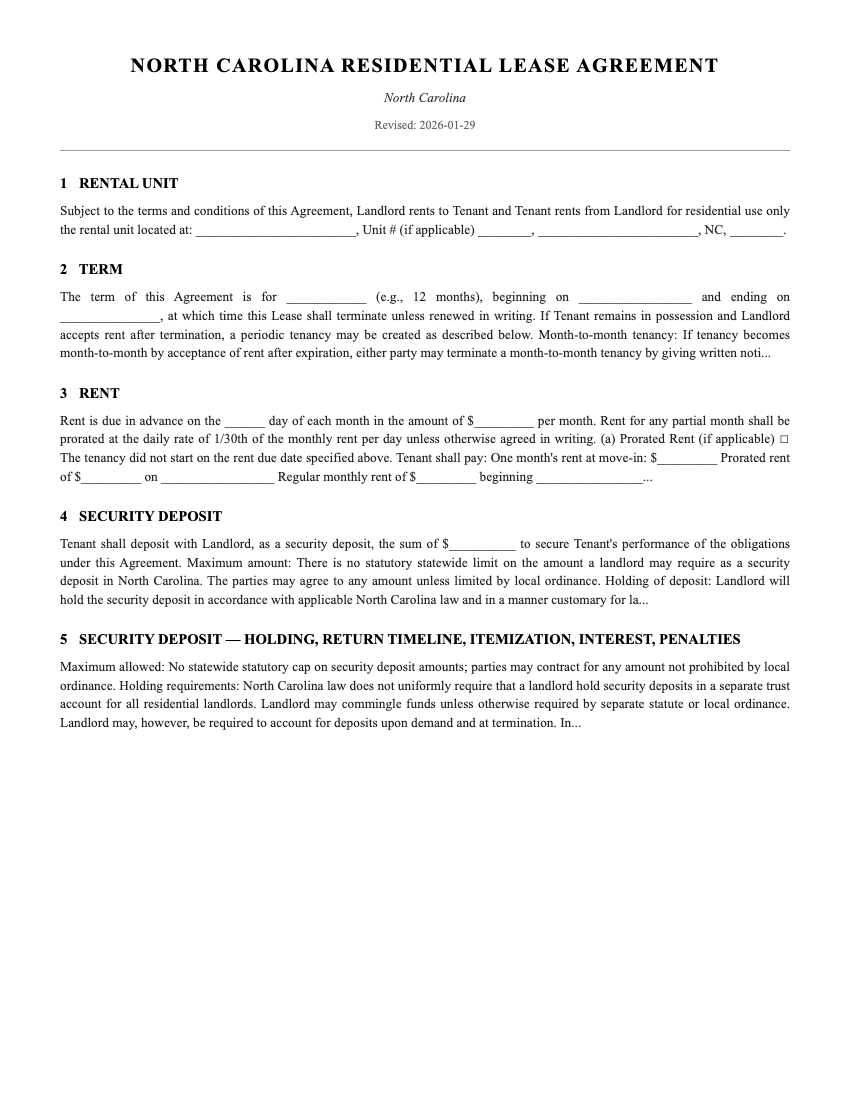
This North Carolina Residential Lease Agreement (2026) includes:
- Clear identification of parties and premises and a standard lease term section (fixed-term and month-to-month options).
- Rent amount, due date, acceptable payment methods, and late/returned payment fee language drafted for enforceability under North Carolina contract principles.
- Security deposit clause that requires an itemized statement of deductions and references the North Carolina statutory disposition procedures (see N.C. Gen. Stat. Chapter 42).
- Required disclosures: federal lead-based paint disclosure (for pre-1978 units), a state sex-offender registry notice reference, and a summary of landlord-tenant rights and remedies as required by North Carolina practice.
- Maintenance and repair obligations, including habitability language consistent with North Carolina statutory and case law expectations.
- Termination and notice language customized for North Carolina: sample "pay or quit" language for nonpayment, cure and termination language for lease violations, and month-to-month termination notice guidance.
- Pets and guest policies with sample limited-authority clauses and procedures for unauthorized occupants.
- Move-in/move-out checklist and inventory attachment to reduce deposit disputes.
- Optional addenda: lead-based paint addendum, pet addendum, parking addendum, and local ordinance compliance addendum.
Download Options
- Single-unit lease PDF (print-ready): /downloads/north-carolina-lease-agreement-2026.pdf
- Editable Word (.docx) version available on request (recommended for customizing names, dates, and local notices).
- Bundled package: lease + move-in checklist + lead disclosure addendum (recommended for pre-1978 properties).
All downloads are designed to be used as a starting point — customize the template to reflect the actual agreement between landlord and tenant, and confirm compliance with local ordinances.
How to Finalize Your Lease
Follow these steps to create an enforceable North Carolina residential lease:
- Choose fixed-term or month-to-month term and enter accurate start/end dates.
- Complete rent, security deposit amount, and permitted payment methods.
- Add required disclosures (lead-based paint, sex-offender registry notice, and any state-required rights summaries).
- Review notice and cure periods — make sure they match the lease and North Carolina statutory expectations for summary ejectment and termination.
- Signatures: obtain dated signatures from all adult tenants and the landlord (or authorized manager).
- Provide copies to tenants and retain originals; consider registering the lease or providing additional local notices if required by municipal code.
For a final legal-technical check, upload the signed copy to an AI contract review tool to flag missing statutory language or problematic clauses before delivering the executed agreement to the other party.
Common North Carolina Clauses — What to Watch For
- Security deposit accounting: Ensure the lease promises an itemized statement of deductions and references statutory disposition procedures in Chapter 42.
- Entry and notice: specify how much notice the landlord will give before entering for repairs or inspections (while respecting statutory and case law limits).
- Utilities and services: spell out which utilities the tenant pays and how shared utilities will be allocated.
- Subleasing and assignments: state whether subletting is permitted and under what conditions.
- Attorney's fees and costs: include a reasonable attorney-fee provision tied to breach and enforcement, but ensure it’s drafted to be enforceable under North Carolina law.
Related Lease Agreement Templates
Frequently Asked Questions (North Carolina)
See the FAQ section below for common state-specific questions and answers.
Final Notes
This template is drafted to align with N.C. Gen. Stat. Chapter 42 and other relevant authorities, but it is not a substitute for legal advice. For disputes, eviction filings, or complex situations (e.g., tenant with disabilities requesting accommodations, litigation risks under Chapter 75, or municipal ordinance compliance), consult an attorney licensed in North Carolina or use an AI contract review tool as an analytical aid before filing pleadings or taking legal action.
<div class="ml-embedded" data-form="bBZ9zR"></div>
Frequently Asked Questions

About Designer Content
Designer Content creates practical legal document resources for landlords, contractors, and small business owners. We simplify complex legal concepts into actionable guidance. Connect with us on LinkedIn.