
Introduction
Using a lease that complies with Florida law is essential to avoid costly disputes and unlawful practices. This template is drafted to follow Part II of Chapter 83, Florida Statutes (Landlord and Tenant), applicable federal rules (including the federal lead-based paint disclosure), and common Florida practice. Key areas covered include security-deposit handling (Fla. Stat. § 83.49), eviction and cure notices (Fla. Stat. § 83.56), landlord identification and service address (Fla. Stat. § 83.50), access and anti-retaliation protections (Fla. Stat. §§ 83.53, 83.64), and required disclosures (lead paint, radon, sprinkler/fire protection, landlord identity).
A well-drafted lease minimizes ambiguity about rent, fees, repairs, entry, guests, and termination procedures. This template is designed for landlords, property managers, and tenants who want a clear, legally informed starting point for a residential tenancy in Florida.
For a comprehensive lease review checklist covering residential and commercial terms, see our Lease Agreement Review Guide.
What is a Florida residential lease?
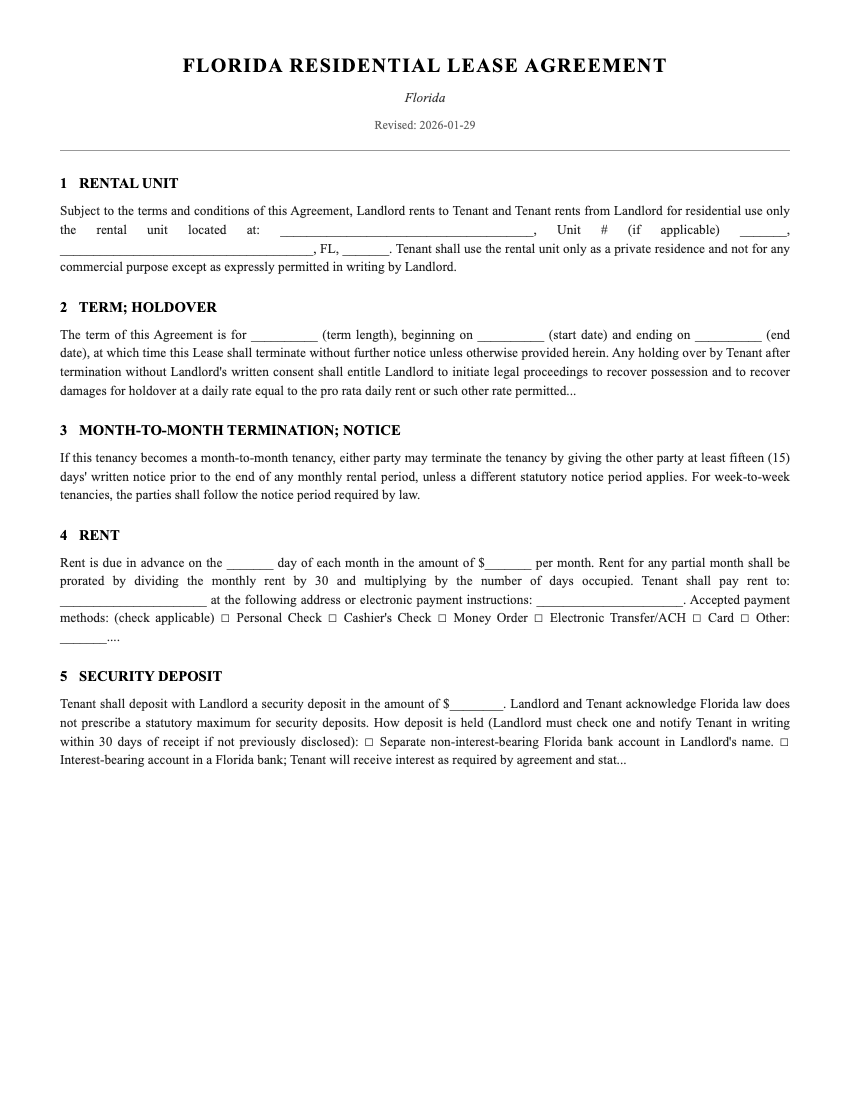
A Florida residential lease is a written contract between a landlord and tenant that sets the terms of occupancy of residential property located in Florida. It defines rent, term, security deposit handling, repairs and maintenance responsibilities, permitted uses, entry/access rules, required statutory disclosures (e.g., landlord identity, lead-based paint for pre-1978 housing), and termination/eviction procedures under Part II of Chapter 83, Florida Statutes.
Why Old Templates Are Dangerous (Florida-specific traps)
- Security deposit mishandling: Florida does not cap deposit amounts, but statutes strictly regulate how deposits must be held and how tenants must be notified. Failure to give the statutory 30-day notice about the deposit’s holding method or to return deposits within 15/30 days can create liability under Fla. Stat. § 83.49.
- Wrong notice periods: Eviction for nonpayment requires a three-day notice to pay rent or vacate (see Fla. Stat. § 83.56). Using outdated cure or quit periods (or local forms from other states) can invalidate a notice and delay an eviction.
- Missing landlord contact info: Fla. Stat. § 83.50 requires disclosure of the landlord’s or agent’s name and address for service. Old forms sometimes omit this or list PO boxes incorrectly.
- Overbroad entry or waiver clauses: Florida law limits landlord entry and prohibits clauses that attempt to waive statutory protections (see Fla. Stat. § 83.53 on access and § 83.64 on retaliatory conduct).
- Federal disclosure failures: Housing built before 1978 requires the federal lead-based paint disclosure and booklet (42 U.S.C. § 4852d). Omission can create federal penalties and give tenants remedy grounds.
- Local regulation changes: Florida preempts most local rent-control ordinances, but emergency or narrow local measures can arise. Relying on an old template without checking current local laws can miss new short-term requirements.
What's Included in This Template
- Parties and premises identification with required landlord/agent name and Florida service address (Fla. Stat. § 83.50).
- Term specification (fixed term and/or month-to-month) and statutory termination notice guidance (15 days for month-to-month termination where applicable, plus specifics for fixed terms).
- Rent amount, due date, acceptable payment methods, late fees (drafted to comply with Florida law and avoid unconscionable penalties).
- Security deposit handling section consistent with Fla. Stat. § 83.49, including how deposits may be held (separate non-interest-bearing account, interest-bearing account, or surety bond), landlord notice requirements, and return timelines (15/30 days) with itemized deductions.
- Utilities and maintenance allocation; landlord repair obligations and notice procedures to comply with Florida habitability standards under Chapter 83.
- Entry and access rules consistent with Fla. Stat. § 83.53 and best practices for notice of entry.
- Anti-retaliation language and tenant protections reflecting Fla. Stat. § 83.64.
- Required disclosures: Lead-based paint (federal 42 U.S.C. § 4852d), Florida radon information, any known sprinkler/fire-protection details, and the landlord/agent identity and address.
- Eviction and cure language aligned with Fla. Stat. § 83.56 (3-day pay-or-vacate for nonpayment; 7-day cure or 7-day unconditional quit where applicable), plus guidance for serving notices and filing for possession.
- Optional addenda: pet addendum, lead-based paint addendum, roommate/additional occupant addendum, move-in checklist, and early-termination options.
Download Options
- Single-unit Landlord (fillable PDF): Immediate download — ideal for individual owners. Download
- Multi-unit or Property Manager: Bundle with addenda (pet, roommate, lead), PDF + editable DOCX.
- Tenant copy: Clean two-page tenant summary with statutory rights (lead, deposit return timeframes, repair notice process).
(Use the download link above to get the fillable PDF. After downloading, run your draft through an AI contract review tool for verification.)
How to Finalize Your Lease
- Complete all blanks — full legal names, property address, term, rent, deposit amount and how it will be held, and landlord/agent service address (required by Fla. Stat. § 83.50).
- Attach required disclosures — lead-based paint addendum (for housing built before 1978), radon information, and any local notices about fire/sprinkler systems.
- Use clear move-in condition documentation — attach a signed move-in checklist or condition report to support deposit accounting under Fla. Stat. § 83.49.
- Signatures and dates — all adult tenants and the landlord (or authorized agent) must sign. Keep originals for landlord and tenant.
- Run the final signed lease through an AI contract review tool for a compliance review and suggested redlines specific to Florida law.
- Provide tenants with copies of the signed lease and any state/federal booklets required by law (e.g., EPA lead pamphlet if applicable).
Practical Notes on Security Deposits (Quick Reference)
- Statutory return timeline: If no claim, return deposit within 15 days after tenant vacates; if claiming all or part, provide written notice of claim and remit remaining portion within 30 days (Fla. Stat. § 83.49(3)(d)).
- Holding options: Deposit may be held in a separate non-interest-bearing account, an interest-bearing account (if parties agree on interest), or secured by a surety bond (Fla. Stat. § 83.49).
- Notice to tenant: Landlord must notify tenant within 30 days of receiving deposit how it is being held (including bank name and address if applicable) and comply with other statutory requirements.
Evictions and Notices (Quick Reference)
- Nonpayment: 3-day notice to pay rent or vacate (Fla. Stat. § 83.56). If tenant does not comply, landlord may file for possession in county court.
- Breach of lease: Standard 7-day notice to cure where right-to-cure applies; in some cases a 7-day unconditional quit may be permitted for repeat or serious violations (see Fla. Stat. § 83.56).
- Month-to-month termination: Typically 15 days' notice prior to the end of any monthly period where applicable and consistent with contract language and case law.
Related Lease Agreement Templates
FAQs
(This article’s FAQ section below includes six common Florida-specific questions and answers.)
<div class="ml-embedded" data-form="bBZ9zR"></div>
Frequently Asked Questions

About Designer Content
Designer Content creates practical legal document resources for landlords, contractors, and small business owners. We simplify complex legal concepts into actionable guidance. Connect with us on LinkedIn.