
Introduction
A legally sound lease protects both landlords and tenants. In Kentucky, landlord-tenant relationships are governed primarily by KRS Chapter 383 (Landlord and Tenant) together with applicable federal disclosures (for example, the EPA lead-based paint disclosure for housing built before 1978). This template is drafted to reflect common Kentucky statutory requirements: the need to account for security deposits and provide an itemized statement of deductions, procedures for notices and termination under KRS Chapter 383, and inclusion of required federal and recommended state/local disclosures.
Use this template as a starting point. Local city ordinances or county rules may add additional requirements (for example, local habitability or registration rules). For precision, run the completed lease through a contract analysis tool such as an AI contract review tool and consult local counsel for complex or high-risk situations.
What is a Kentucky residential lease?
A residential lease in Kentucky is a written agreement between a landlord and tenant that sets the terms for occupancy of dwelling space (rent, term, security deposit, repairs, rules, and remedies). It is governed primarily by Kentucky Revised Statutes Chapter 383 (KRS Chapter 383) and must incorporate required federal disclosures (for example, the lead-based paint disclosure for properties built before 1978). The lease creates contractual obligations enforceable in Kentucky courts and is subject to consumer-protection rules under KRS Chapter 367 where applicable.
Why Old Templates Are Dangerous (Kentucky-specific traps)
- Security deposit timing: Old forms may state an incorrect return deadline. Kentucky practice and interpretations of KRS Chapter 383 require an itemized statement and return of any remaining deposit within the statutory period after termination—commonly administered as within 30 days in many jurisdictions. Using an outdated deadline risks statutory claims and damages.
- Missing federal disclosures: Properties built before 1978 require the EPA lead-based paint disclosure and pamphlet. Failure to include this can create federal liability and affect landlord remedies.
- Incompatible notice periods: Kentucky eviction procedures and notice requirements are governed by KRS Chapter 383; forms that presume different notice lengths (or don't provide a clear cure period for curable breaches) may cause procedural issues in court.
- Overbroad forfeiture or penalty clauses: Kentucky courts may find unconscionable or deceptive terms unenforceable; such clauses can also draw scrutiny under KRS Chapter 367 (Kentucky Consumer Protection Act).
- Local ordinance omissions: Some cities or counties may require rental registration, local disclosures, or ordinances affecting security deposit handling—old statewide templates won't capture these municipal rules.
- Ignoring habitability and repair statutes: Kentucky habitability obligations and retaliatory conduct rules are tied to KRS provisions and case law; outdated templates may not protect either party properly.
What's Included in This Template
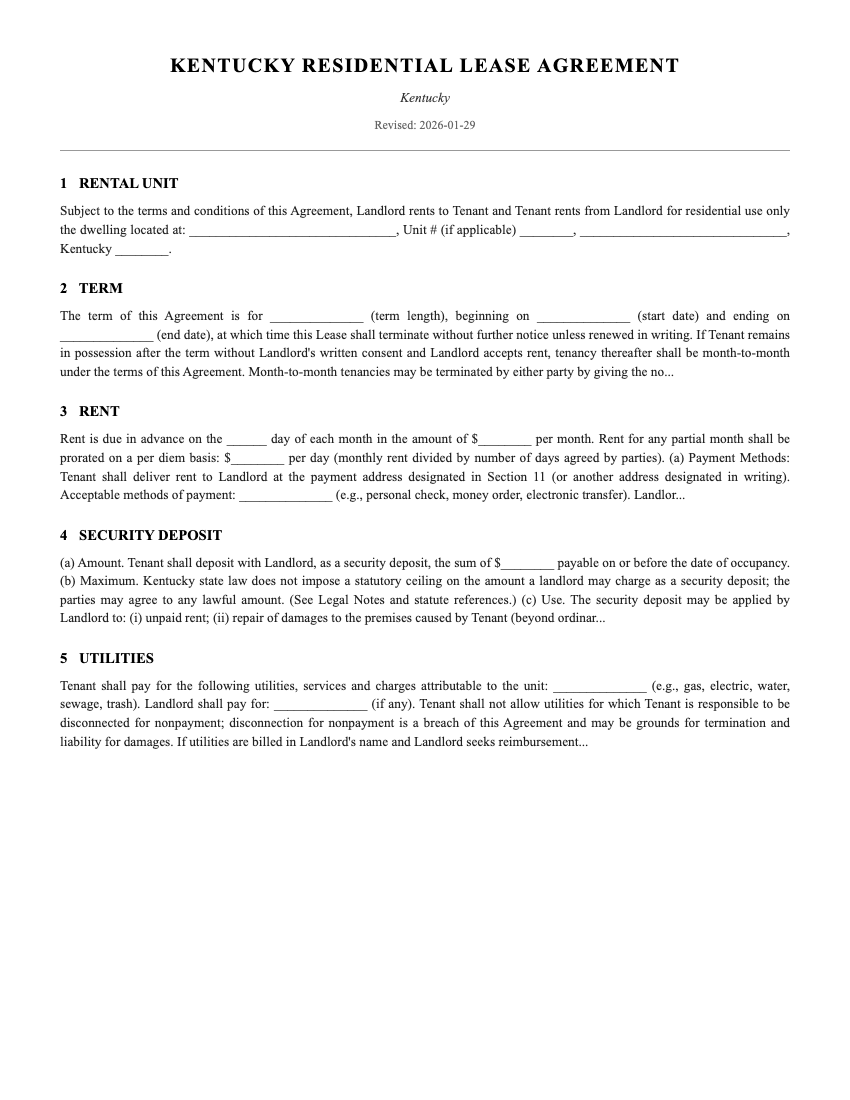
This Kentucky Residential Lease Agreement template includes the following sections and attachments:
- Basic lease information: names, premises, term (fixed-term and month-to-month options), permitted use.
- Rent clause: amount, due date, late fees (consistent with Kentucky law and local rules), accepted payment methods.
- Security deposit provisions: amount (no statewide cap), written receipt, required itemization of deductions, return procedure consistent with KRS Chapter 383 (commonly administered as 30 days following termination and delivery of possession), and potential remedies for noncompliance.
- Maintenance and repairs: landlord and tenant obligations, notice procedures for repairs, and remedies for breach of habitability.
- Entry by landlord: reasonable notice and purpose for entry consistent with Kentucky expectations.
- Lease default and remedies: cure periods, notices for nonpayment, and procedure to initiate eviction consistent with KRS Chapter 383.
- Federal and state-required disclosures: EPA lead-based paint disclosure (for pre-1978 housing), Kentucky Consumer Protection notice items, and recommended advisories (sex offender registry link, flood/radon advisories where appropriate).
- Utilities and services, parking, pets (optional pet addendum), subletting and assignment, and optional rent increase language for month-to-month tenancies.
- Move-in checklist addendum and inventory section to reduce deposit disputes.
- Signature block and optional notary acknowledgement.
Related Lease Agreement Templates
Download Options
- PDF (recommended for finished, non-editable record): /downloads/kentucky-lease-agreement-2026.pdf
- Editable Word (.docx) for customization (download available on page)
- Plain-text/RTF for import into property management software
We encourage you to keep a signed PDF copy for both landlord and tenant records. Use the move-in checklist addendum included with the template to document condition at delivery of possession.
How to Finalize Your Lease
- Confirm statutory language: Ensure the lease includes security deposit itemization and return timing consistent with KRS Chapter 383 and any applicable local rules.
- Complete all disclosure forms: Attach the EPA lead-based paint disclosure (for pre-1978 housing) and provide any local required notices.
- Conduct a move-in inspection: Fill out the move-in checklist and have both parties sign. Attach photos or video if possible.
- Exchange signed copies and receipts: Provide the tenant a written receipt for the security deposit and a fully signed copy of the lease.
- Run an AI contract review tool review: Upload the executed lease to an AI contract review tool to flag gaps or inconsistent clauses before disputes arise.
- Keep records: Maintain signed lease, receipts, inspection checklists, and any correspondence related to repairs, notices, and payments.
Common Kentucky Lease Clauses Explained (brief)
- Security deposit accounting: Although Kentucky does not cap deposit amounts, KRS Chapter 383 requires landlords to itemize deductions and return remaining funds within the statutory period after lease termination and surrender of possession.
- Notice periods: Follow KRS Chapter 383 for eviction procedure and the lease for termination notice in month-to-month tenancies (30 days is commonly used unless local ordinance says otherwise).
- Repairs and habitability: Landlords must comply with habitability standards; tenants must give timely written notice to trigger landlord obligations and preserve remedies.
When to Get Legal Help
If you anticipate collecting large deposits, face a contested eviction, need a complex commercial arrangement, or have questions about local municipal rental codes, consult a Kentucky-licensed attorney or legal aid organization. Automated checks help find issues but do not replace legal counsel.
<div class="ml-embedded" data-form="bBZ9zR"></div>
Frequently Asked Questions

About Designer Content
Designer Content creates practical legal document resources for landlords, contractors, and small business owners. We simplify complex legal concepts into actionable guidance. Connect with us on LinkedIn.