
Maine Residential Lease Agreement Template — Why compliance matters
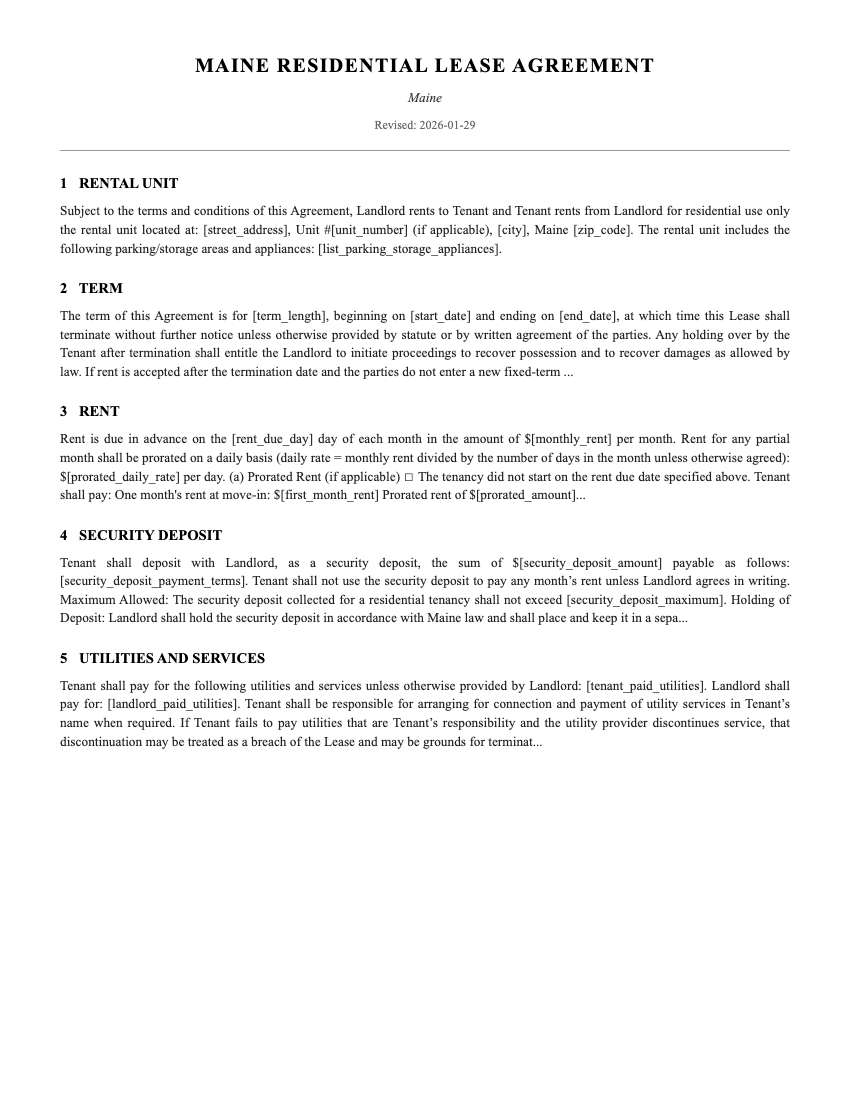
A residential lease in Maine is a legal contract that sets the rights and responsibilities of landlords and tenants. Maine regulates landlord-tenant relationships primarily through the Maine Revised Statutes, Title 14 (Residential Landlord and Tenant provisions, 14 M.R.S. §6001 et seq.). Using a lease that reflects Maine law protects both parties, reduces the chance of disputes, and speeds enforcement if problems arise.
This template is drafted to align with the statutory framework in Maine: security deposit handling and itemized accounting, required disclosures (lead-based paint for pre-1978 homes; smoke and carbon monoxide alarm notices), statutory notice periods for nonpayment and termination, and statutory repair and habitability duties. It is not a substitute for legal advice; always confirm statute numbers and local ordinances that may apply to your property.
For a comprehensive lease review checklist covering residential and commercial terms, see our Lease Agreement Review Guide.
Definition: What is a Maine residential lease?
A Maine residential lease is a written contract between a landlord and tenant that establishes the term of occupancy, the rent amount and payment terms, permissible uses of the premises, responsibilities for repairs and maintenance, security deposit rules, and procedures for notices and termination. Maine law that governs these relationships appears in Title 14 of the Maine Revised Statutes (see 14 M.R.S. §6001 et seq.).
Why old templates are dangerous (Maine-specific traps)
- Security deposit compliance: Maine requires an itemized statement of deductions and timely return of the deposit balance after tenancy ends. Old templates often omit the required timing and itemization language and can expose landlords to statutory damages and attorney's fees.
- Missing or incorrect disclosures: Federal lead-based paint disclosures (42 U.S.C. §4852d) and Maine requirements for smoke and carbon monoxide alarms must be included. Templates that predate modern alarm laws or federal lead rules are risky.
- Out-of-date notice periods: Maine statutes set specific notice periods for nonpayment and termination of periodic tenancies. Using older or out-of-jurisdiction notice periods can invalidate termination attempts.
- Habitability and repair obligations: Maine law imposes landlord repair duties and tenant remedies for breaches of habitability. Templates that disclaim statutory remedies or require tenants to waive statutory rights are unenforceable.
- Local ordinance conflicts: While Maine has no statewide rent control, municipal rules (if any) or local building codes can affect your lease. An old template from another state will not account for Maine-specific requirements.
What's included in this template
- Parties and property identification section
- Lease term (fixed-term and month-to-month options)
- Rent amount, due date, late fees (clearly stated), and acceptable payment methods
- Security deposit clause with: amount, permissible deductions, requirement for an itemized statement of deductions, and statutory return timeframe guidance
- Required disclosures: Lead-based paint (federal 42 U.S.C. §4852d), smoke and carbon monoxide alarm statement, habitability and repair notice
- Maintenance and repair responsibilities mapped to Maine habitability standards
- Entry and access rules consistent with Maine notice practices
- Utilities, prorations, and common area rules
- Subletting and assignment terms
- Pets and guest/occupancy limits
- Termination, notice periods, and remedies for nonpayment and breaches (statutory process overview)
- Signature blocks and optional witness/notary language
Related Lease Agreement Templates
Download options
- Download a ready-to-fill PDF: /downloads/maine-lease-agreement-2026.pdf
- Editable Microsoft Word (.docx) and Google Docs versions available on the download page for customization
- Printable one-page summary of tenant obligations and required disclosures (for tenant to keep)
How to finalize your lease
- Fill in all blanks: names, rent, deposit amount, term, and any property-specific rules.
- Attach required disclosures: lead-based paint disclosure (if applicable), smoke/CO alarm notice, security deposit receipt or statement.
- Deliver to the tenant before they move in: provide the tenant with the complete lease and all disclosures. Keep a copy for your records.
- Sign and date: collect signatures from all tenants and the landlord (or authorized property manager). Consider notarizing if required for your records.
- Provide keys and move-in condition checklist: document the unit condition with photographs and a signed move-in inspection form.
- Upload the fully executed PDF to an AI contract review tool for a final compliance check and contract analysis.
Final notes
This template is drafted to reflect Maine's residential landlord-tenant framework under Title 14 (14 M.R.S. §6001 et seq.) and relevant federal laws. Laws change — always re-check current statutes and consult an attorney for complex situations or when you plan to take eviction action.
<div class="ml-embedded" data-form="bBZ9zR"></div>
Frequently Asked Questions

About Designer Content
Designer Content creates practical legal document resources for landlords, contractors, and small business owners. We simplify complex legal concepts into actionable guidance. Connect with us on LinkedIn.