
Introduction
Using a lease that reflects New Hampshire law is essential to protect both landlords and tenants. This New Hampshire Residential Lease Agreement template is drafted to align with RSA Chapter 540 (summary process/eviction), RSA 358‑A (Consumer Protection Act), the three‑year statute of limitations for most contract claims (RSA 508:4), and applicable federal disclosure rules such as the lead‑based paint disclosure (42 U.S.C. § 4852d). It clarifies security deposit handling (itemization and return timing), notice periods for termination and nonpayment, and required disclosures specific to New Hampshire.
This article explains what the lease does, why older or out‑of‑state templates can create legal risk in New Hampshire, and how to finalize the lease for your property. Always confirm statutory changes and consider review by counsel for complex situations.
For a comprehensive lease review checklist covering residential and commercial terms, see our Lease Agreement Review Guide.
What is a New Hampshire residential lease?
A New Hampshire residential lease is a written contract between a landlord and a tenant that sets the terms for occupying a dwelling in New Hampshire. It governs rent, security deposits, term length, maintenance responsibilities, required disclosures (e.g., lead‑based paint), and remedies for defaults. The lease must be applied in the context of New Hampshire statutes such as RSA Chapter 540 (summary process), RSA 358‑A (Consumer Protection Act), and applicable federal requirements.
Why Old Templates Are Dangerous (NH‑specific traps)
- Out‑of‑state forms may insist on tenant waivers or notice procedures that conflict with RSA Chapter 540 procedures for summary process — risking unenforceability of eviction notices.
- Templates that assume a statutory cap on security deposits can mislead parties: New Hampshire has no statewide deposit cap, but state law requires timely return with an itemized statement and may impose damages for wrongful retention.
- Failure to include federal lead‑based paint disclosure for dwellings built before 1978 is a federal violation (42 U.S.C. § 4852d) and can expose the landlord to penalties and withheld rents.
- Using templates that require escrow interest payments without an express written agreement may create unintended obligations. NH does not require interest on deposits unless agreed or locally required.
- Inadequate notice periods: many forms use generic termination or cure periods; New Hampshire practice (and courts) expect notices to align with RSA Chapter 540 and local court rules for summary process actions.
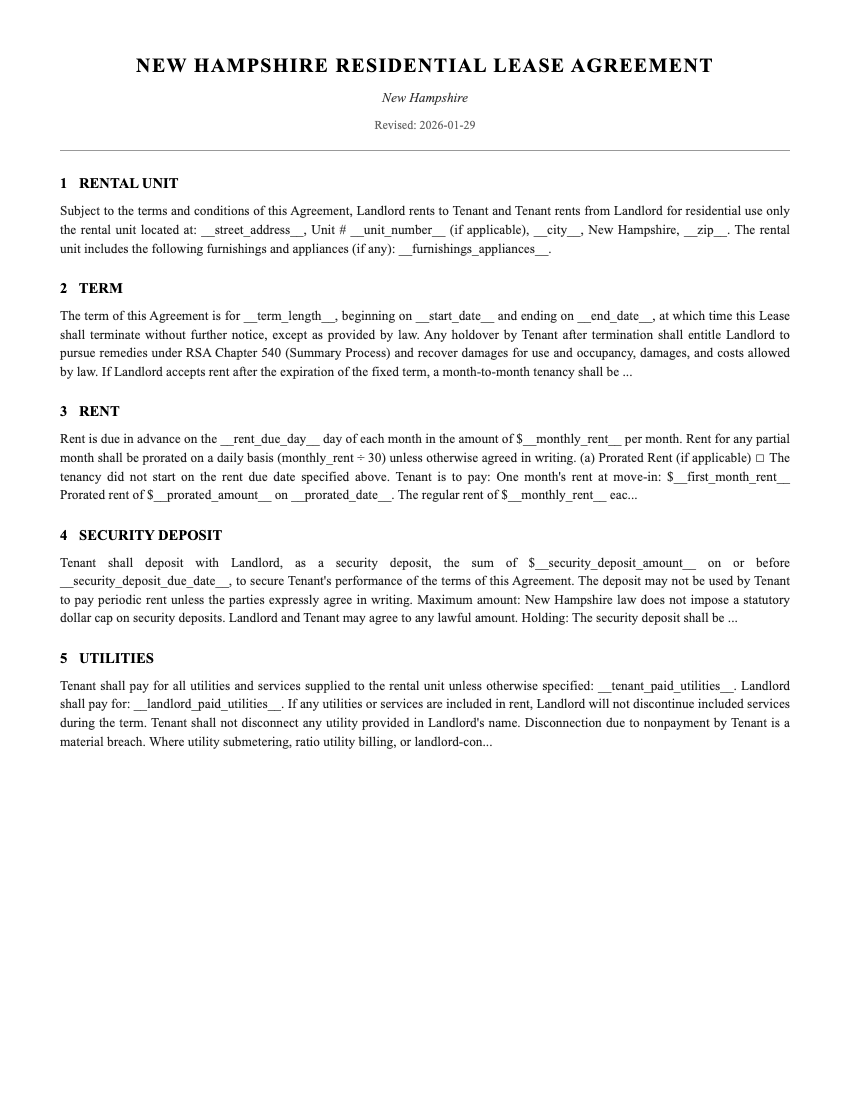
What's Included in This Template
- Clear lease term (fixed term and month‑to‑month options)
- Rent amount, due dates, late fees (as agreed), and grace period language tailored to NH practice
- Security deposit clause with: agreed deposit amount, requirement of itemized statement of deductions, 30‑day return period after termination and surrender of possession, and method of delivery
- Required disclosures section: federal lead‑based paint disclosure, sex offender registry notice, and flood/environmental hazard advisory language
- Maintenance and repair allocation, habitability standards, and tenant remedies under NH law
- Default, cure, and termination procedures aligned with RSA Chapter 540 summary process requirements and common NH notice practices (including a typical 7‑day notice to quit for nonpayment and 30‑day notice conventions for periodic tenancies)
- Option language for early termination, subletting and assignment rules, and guest/occupancy limits consistent with local housing codes
- Signatures and execution instructions for landlord and tenant
Download Options
- Single PDF — ready to download: /downloads/new-hampshire-lease-agreement-2026.pdf
- Fillable Word doc — contact our downloads page for an editable version for negotiation
- Bundle — lease + move‑in checklist + inventory form (recommended to document condition for security deposit disputes)
How to Finalize Your Lease
- Customize party names, property address, lease term, rent amount, payment instructions, and security deposit amount.
- Confirm the property’s age — attach the federal lead‑based paint disclosure if built before 1978.
- Add any agreed special provisions (pets, parking, utilities) and ensure they do not conflict with state law or local ordinances.
- Run the lease through an AI contract review tool for a jurisdictional verification report and resolve any flags.
- Have both parties sign and date the lease; provide copies to tenants at move‑in.
- Document property condition with the inventory/move‑in checklist and keep records of deposit receipt and delivery method.
Move‑In Checklist (recommended)
- Completed property condition form signed by landlord and tenant
- Proof of delivery/receipt of security deposit
- Copy of signed lease and any addenda
- Copies of required disclosures (lead, sex offender registry notice, flood advisory)
Legal Notices & Evictions (Quick NH Guide)
- Nonpayment: Common practice is to serve a 7‑day notice to quit for nonpayment before filing a summary process action under RSA Chapter 540, but parties should confirm local court rules.
- Other breaches: Landlords typically provide a written notice identifying the breach and allowing a reasonable cure period when applicable; irreparable breaches may warrant an immediate notice to quit.
- Month‑to‑month termination: Customarily 30 days’ written notice by either party unless lease specifies otherwise.
- Summary process: Eviction actions are governed by RSA Chapter 540; landlords must follow statutory and local court procedures for filing and service.
Related Lease Agreement Templates
FAQs
(See the FAQ section below for more detail.)
<div class="ml-embedded" data-form="bBZ9zR"></div>
Frequently Asked Questions

About Designer Content
Designer Content creates practical legal document resources for landlords, contractors, and small business owners. We simplify complex legal concepts into actionable guidance. Connect with us on LinkedIn.