
Introduction
A legally compliant lease protects both landlords and tenants. In Connecticut, residential leases must comply with Title 47a of the Connecticut General Statutes and federal disclosure rules (including the lead-based paint disclosure at 42 U.S.C. § 4852d). This template is written to implement Connecticut-specific rules for security deposits (Conn. Gen. Stat. § 47a-21), required disclosures, notice periods, and the state summary process eviction procedures. Use the template as a starting point and customize only after confirming municipal ordinances and any recent legislative changes.
What is a Connecticut residential lease?
A residential lease in Connecticut is a written contract between a landlord and tenant that sets the terms for occupancy of residential premises (rent, duration, security deposit handling, repairs, utilities, and termination). Leases are governed by Conn. Gen. Stat. Title 47a and related state and federal laws and regulations. A valid lease must not violate statutory protections (for example, security deposit rules in Conn. Gen. Stat. § 47a-21) and must include required federal and state disclosures.
Why compliance matters in Connecticut
Connecticut has statutory rules that directly affect common lease provisions:
- Security deposits: Connecticut prescribes where deposits must be held, notice requirements, interest accounting, itemized deductions, and timelines for return (Conn. Gen. Stat. § 47a-21). Failure to comply can result in damages and statutory penalties.
- Eviction: Landlords must use the state summary process (Title 47a) and follow court rules for notices and filings; improper procedures may delay or defeat an eviction case.
- Federal and state disclosures: The federal lead-based paint disclosure (42 U.S.C. § 4852d) is mandatory for pre-1978 housing; Connecticut also requires disclosure and notice practices for security deposits and other health/safety issues.
This template incorporates those requirements so common drafting pitfalls are minimized.
Why Old Templates Are Dangerous (Connecticut-specific traps)
- Security deposit mishandling
- Old templates may allow deposits greater than two months' rent or omit required escrow/accounting notices. Conn. Gen. Stat. § 47a-21 limits handling and imposes interest/accounting rules. - Incorrect timelines for returning deposits
- Connecticut requires specific timing and itemized statements upon termination. Using generic deadlines risks statutory penalties and possible CUTPA claims (Conn. Gen. Stat. § 42-110a et seq.). - Missing federally required disclosures
- The lead-based paint disclosure (42 U.S.C. § 4852d) is mandatory for properties built before 1978. Old forms may omit it. - Inconsistent eviction/notice language
- Connecticut’s summary process has procedural steps and local court rules—forms that assume other states’ notice periods or procedures can render a notice ineffective. - Local code and municipal programs
- Municipalities may have rental registration, certificate-of-occupancy, or anti-discrimination provisions. An old statewide template can miss local obligations. - Inadequate entry, repair, or habitability language
- Connecticut landlords have duties to maintain premises under Title 47a; vague repair timelines or improper waiver language can be unenforceable or expose landlords to claims.
What's Included in This Template
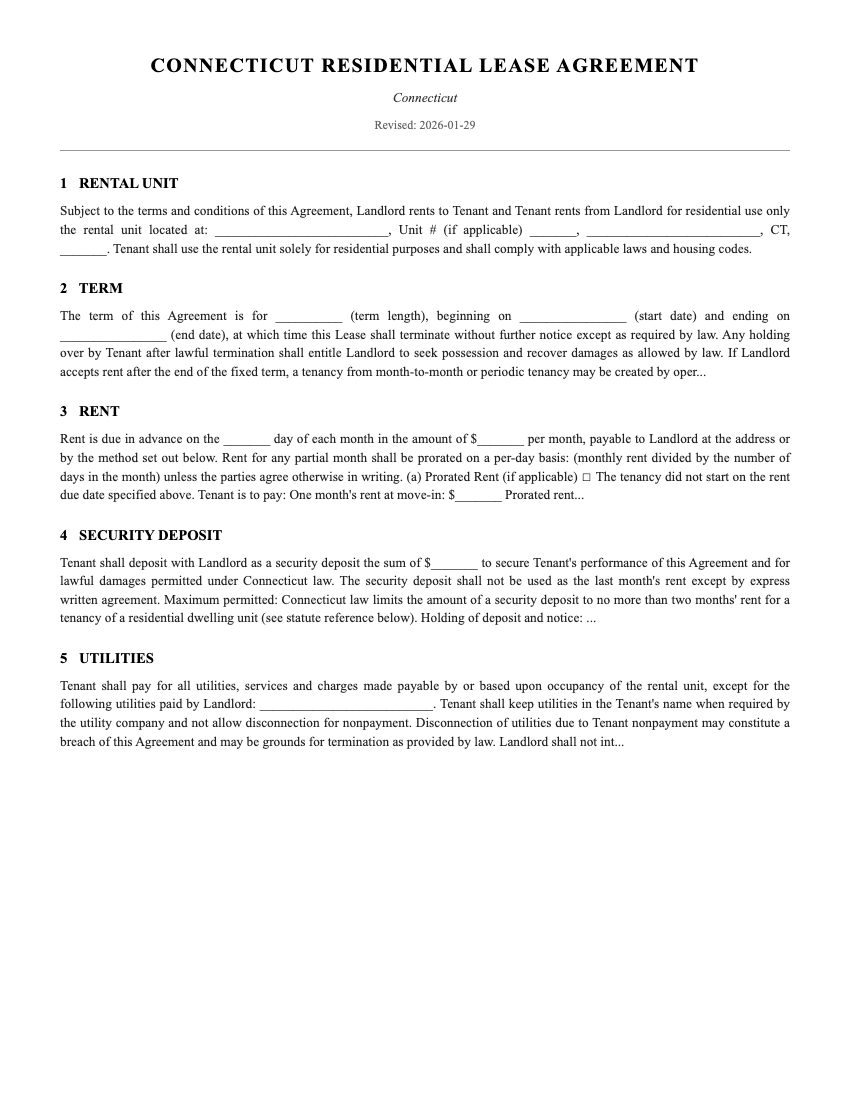
This Connecticut Residential Lease Agreement template includes:
- Parties, premises, and term (fixed-term and month-to-month options).
- Rent amount, due date, late fees (subject to state law), and permitted payment methods.
- Security deposit provisions complying with Conn. Gen. Stat. § 47a-21: maximum commonly two months' rent, escrow/accounting notice, interest handling, itemization of deductions, and return timing.
- Mandatory disclosures:
- Federal lead-based paint disclosure (42 U.S.C. § 4852d) and EPA/ HUD pamphlet reference.
- Connecticut security deposit notice and accounting language (Conn. Gen. Stat. § 47a-21).
- Smoke and carbon monoxide detector notice and tenant responsibilities (follow state and municipal requirements).
- Known environmental/health hazard disclosure section. - Entry, repairs and maintenance, and habitability obligations consistent with Title 47a.
- Lease termination and notice clauses for fixed-term and month-to-month tenancies (30 days commonly used for month-to-month terminations; see Title 47a for specific circumstances).
- Summary process and eviction notice guidance (reference to Conn. Gen. Stat. Title 47a and Connecticut Judicial Branch resources).
- Assignments, subletting, guest/occupancy limits, and sublease authorization language.
- Sample signatures, move-in condition checklist, and joint-and-several liability options.
Download Options
- Standard PDF: Single-unit lease for 1–2 occupants. Download: /downloads/connecticut-lease-agreement-2026.pdf
- Multi-unit addendum: Clauses for multi-family properties (unit-specific rules, common areas).
- Lead-Disclosure Pack: Federal lead-based paint disclosure form and EPA pamphlet included where required.
Each download includes an instruction checklist and recommended fillable fields. After customizing, run the lease through an AI contract review tool for an automated safety check and statutory compliance suggestions.
How to Finalize Your Lease
- Complete party names, correct address, rent, and deposit amounts. Ensure security deposit does not exceed the maximum you agreed to under Conn. Gen. Stat. § 47a-21.
- Attach required disclosures: lead-based paint form for pre-1978 properties (42 U.S.C. § 4852d); security deposit notice language; smoke/CO notices.
- Confirm municipal obligations (rental registration, local ordinances, or affordability programs) with your town/city clerk or housing department.
- Run the completed lease through an AI contract review tool to identify missing Connecticut-specific clauses, incorrect deposit language, or problematic termination/eviction phrasing.
- Signatures: execute the lease with all adult tenants and the landlord or authorized agent; provide each tenant with a fully executed copy.
- Provide required security deposit notices and place the deposit in the insured account as required by Conn. Gen. Stat. § 47a-21; provide tenants with required account and interest notices.
Related Lease Agreement Templates
Frequently Asked Questions (Connecticut)
Q1: What is the maximum security deposit I can require in Connecticut?
A1: Connecticut law caps customary security deposit practices; many landlords limit deposits to a maximum commonly equivalent to two months' rent. The deposit must be held and accounted for per Conn. Gen. Stat. § 47a-21, with required notices and interest/accounting procedures.
Q2: How quickly must a landlord return the security deposit after a tenant moves out?
A2: Conn. Gen. Stat. § 47a-21 requires the landlord to provide an itemized statement of deductions and return the balance within the timeframe set by statute after termination and surrender of premises. The statute prescribes detailed procedures for accounting and return—follow § 47a-21 closely and keep contemporaneous records.
Q3: Does Connecticut have rent control or limits on rent increases?
A3: Connecticut does not have statewide rent control; rent increases are governed by the lease and contract law. Landlords should follow any lease notice provisions and check for municipal programs that might limit increases. For eviction or nonpayment-related matters, follow Title 47a summary process rules.
Q4: What disclosures are required when renting in Connecticut?
A4: At minimum, landlords must provide:
- Federal lead-based paint disclosure for properties built before 1978 (42 U.S.C. § 4852d);
- Connecticut-required security deposit notice and accounting language (Conn. Gen. Stat. § 47a-21);
- Notices regarding smoke and carbon monoxide detectors and any known environmental or health hazards. Check local municipal disclosure requirements as well.
Q5: What notice does a landlord need to give to end a month-to-month tenancy?
A5: A 30-day written notice is commonly used for month-to-month tenancies in Connecticut, but specific circumstances and statutes in Title 47a may require different or longer notices. Always verify the applicable provision in Title 47a and municipal rules before serving notice.
Q6: Can a landlord restrict guests or subletting in a Connecticut lease?
A6: Yes. A lease can include reasonable guest and occupancy limits and require landlord consent for subletting or assignment. However, overly broad restrictions may be contested; specify time limits for guest stays, procedures to request permission to sublet, and clearly state consequences for unauthorized subletting. Ensure these provisions do not conflict with Connecticut statutory rights or housing code protections.
Final tips
- Keep records: itemized move-in condition checklist, receipts for repairs, and deposit accounting—these are crucial if a dispute proceeds to summary process.
- Use local resources: consult Connecticut Judicial Branch eviction resources and municipal housing departments for local rules and forms.
- Consider legal review: an AI contract review tool can flag issues, but consult a Connecticut landlord-tenant attorney for complex matters or contentious evictions.
<div class="ml-embedded" data-form="bBZ9zR"></div>
Frequently Asked Questions

About Designer Content
Designer Content creates practical legal document resources for landlords, contractors, and small business owners. We simplify complex legal concepts into actionable guidance. Connect with us on LinkedIn.