
Introduction
A properly drafted Massachusetts residential lease isn't just a form — it's a legal roadmap that protects both landlord and tenant rights under state law. Massachusetts imposes specific requirements for security deposits (M.G.L. c.186, §15B), mandatory disclosures (federal and state lead laws, smoke and carbon monoxide requirements), and eviction procedures governed by the summary process (M.G.L. c.239). Using a template that reflects these rules helps avoid statutory penalties (including treble damages under M.G.L. c.186 §15B for deposit violations), breach disputes, and unwelcome litigation.
This template has been updated for 2026 to incorporate the most important Massachusetts landlord–tenant rules: the one-month security deposit cap, escrow and annual accounting requirements, required disclosures, and clauses that align with summary process practice. It is designed for clarity for landlords and tenants without legal training while preserving important legal language and citations.
For a comprehensive lease review checklist covering residential and commercial terms, see our Lease Agreement Review Guide.
What is a Massachusetts residential lease?
A Massachusetts residential lease is a written contract between a landlord and tenant that sets the terms of occupancy for a dwelling located in Massachusetts, including rent, term, security deposit handling (held in a separate Massachusetts escrow account with interest accounting per M.G.L. c.186, §15B), maintenance responsibilities, required disclosures (lead paint and others), and remedies for noncompliance. It is enforceable under Massachusetts statutes and the summary process found at M.G.L. c.239.
Why Old Templates Are Dangerous (Massachusetts-specific traps)
Using an outdated generic lease can expose landlords and tenants to real legal risks in Massachusetts:
- Security deposit violations: Massachusetts limits deposits to one month's rent and requires the funds be held in a separate escrow account in a Massachusetts bank with annual accounting and interest treatment (M.G.L. c.186, §15B). Old forms often omit escrow-account language, notice requirements, or interest accounting — omissions that can lead to treble damages, attorney's fees, and statutory penalties.
- Incorrect notice language: Eviction must follow the summary process (M.G.L. c.239). A lease that uses improper notice periods or wrong procedural steps can delay lawful remedies or be unenforceable in court.
- Missing required disclosures: Massachusetts has both federal and state lead-paint disclosure obligations (42 U.S.C. §4852d; M.G.L. c.111, §§190–199). Forms that omit these disclosures risk civil penalties and denial of eviction relief based on procedural defenses.
- Retaliation and tenant-protection language: M.G.L. c.186, §18 creates a presumption of retaliation in certain circumstances. Old leases may include retaliatory clauses or fail to provide mandated notices.
- Insurance and safety notices: Massachusetts expects landlords to ensure working smoke and CO detectors and to provide relevant notices. Missing these increases liability risk.
What's Included in This Template
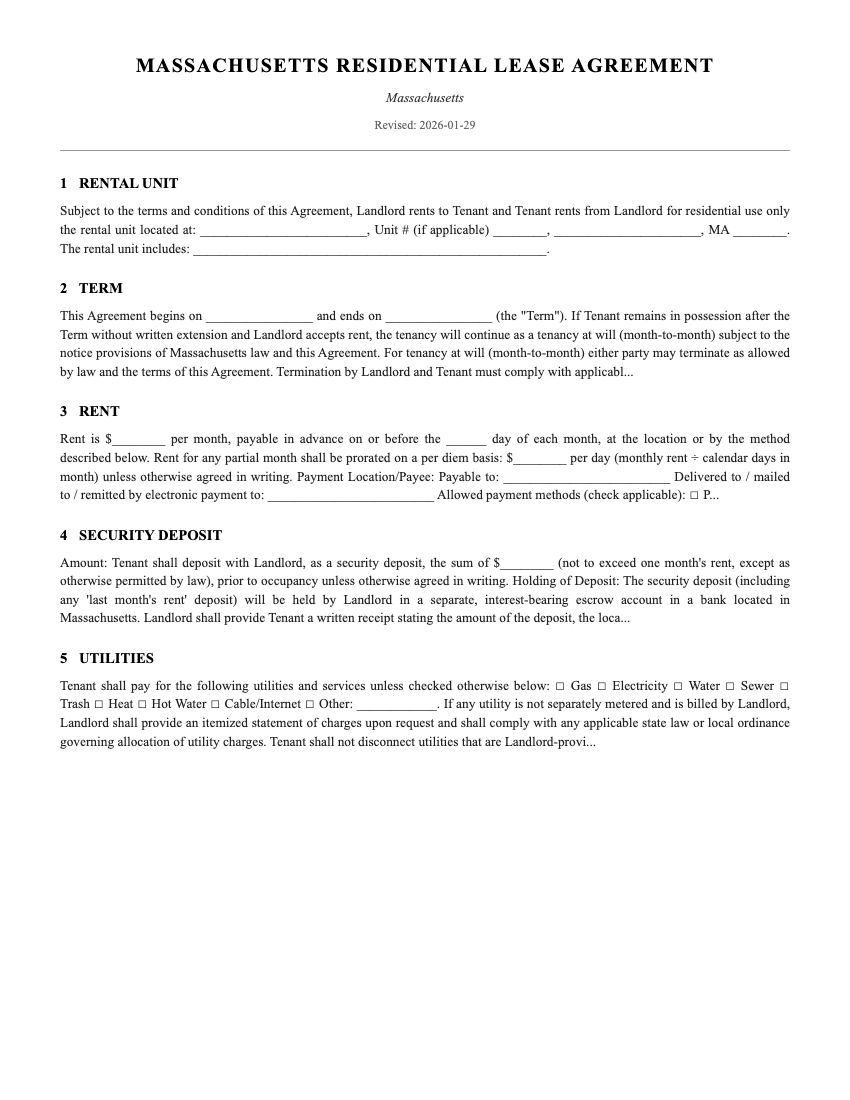
This Massachusetts Residential Lease Agreement template includes:
- Security deposit clause compliant with M.G.L. c.186, §15B: one-month cap, required escrow account language, annual interest accounting/disclosure, and 30-day return/itemization language.
- Move-In/Move-Out Condition Checklist and instructions for itemization of deductions.
- Required statutory notices and disclosures:
- Lead-Based Paint Disclosure (federal and Massachusetts Lead Law) — 42 U.S.C. §4852d; M.G.L. c.111, §§190–199
- Security Deposit Disclosure & escrow-account notice (M.G.L. c.186, §15B)
- Retaliation Notice (M.G.L. c.186, §18)
- Summary Process / Eviction Procedure overview (M.G.L. c.239)
- Smoke and Carbon Monoxide Detector certification and notice
- Insurance and fire/flood risk recommendation
- Move-In/Move-Out Condition Checklist
- Bed bug / pest disclosure and tenant/landlord responsibilities - Rent, late fee, and payment instructions (clear fields for rent amount, due date, accepted payment methods and notice periods for increases in accordance with lease terms)
- Cure and notice clauses for non-rent breaches (recommended reasonable cure periods; aligns with summary process practice)
- Inspection and repair procedures, entry notice recommendations, and local code compliance responsibilities
- Signature blocks for Landlord and Tenant, and optional witness or notary section
This template balances plain-language guidance with statutory citations to aid enforceability.
Related Lease Agreement Templates
Download Options
- Download PDF (fillable): /downloads/massachusetts-lease-agreement-2026.pdf
- Print-friendly version included in the PDF
- Optional addenda: short-term rental addendum, pet addendum, lead-law compliance addendum (available as separate downloads)
How to Finalize Your Lease
When both parties are ready to finalize, follow these recommended steps (also see the HowTo steps section below):
- Complete all blanks in the lease: names, property address, term dates, rent, deposit amount (must not exceed one month's rent), and bank/escrow details for the deposit.
- Attach the Move-In/Move-Out Condition Checklist and lead disclosures. Have tenant and landlord sign and date both the lease and checklist.
- Provide the security deposit escrow notice and bank account info as required by M.G.L. c.186, §15B. Deliver a copy to the tenant at move-in.
- Confirm working smoke and CO detectors and provide the smoke/CO notice.
- Upload the executed lease to an AI contract review tool for a compliance scan; address any flagged issues before possession.
- Keep originals and provide tenant with a signed copy. Maintain escrow accounting records for security deposits and prepare to provide annual accounting information to the tenant as required.
Practical Notes on Eviction, Termination, and Notices
- Nonpayment: For nonpayment of rent, Massachusetts summary process practice commonly begins with a 14-day pay-or-quit notice. Courts follow M.G.L. c.239 procedures for summary process actions — review local court rules and consider legal counsel for contested cases.
- Lease termination: For month-to-month tenancies or tenancies at will, notice periods should be specified in the lease and conform to summary process expectations; always follow the lease's termination clause and M.G.L. guidance for possession suits.
- Retaliation: Landlords must not evict or retaliate against tenants for exercising protected rights (M.G.L. c.186, §18). Retaliatory eviction is prohibited and may be presumed under certain protected activities.
Tenant and Landlord Tips
- Landlords: Never commingle security deposits with operating funds; maintain escrow account records and provide the required annual accounting and notice. Keep copies of all disclosures and signed checklists.
- Tenants: At move-in, complete the condition checklist and keep a signed copy. Ask for the bank and account information for the escrowed deposit, and keep proof of rent payments. If you suspect an improper deposit handling, you may have statutory remedies under M.G.L. c.186 §15B and consumer protections under M.G.L. c.93A.
Next Steps — Use an AI contract review tool and Local Counsel
After you download and complete the template, run it through an AI contract review tool for a fast compliance check. The tool will flag missing Massachusetts-specific language, suggest edits, and point out inconsistent notice periods. For contested or complex situations (large properties, subsidy vouchers, lease bargaining), consult a Massachusetts landlord–tenant attorney.
Appendix: Required Disclosures Checklist (Included in Template)
- Lead-Based Paint Disclosure (federal & Massachusetts Lead Law)
- Security Deposit & Escrow Disclosure (M.G.L. c.186, §15B)
- Retaliation Notice (M.G.L. c.186, §18)
- Summary Process / Eviction Procedure overview (M.G.L. c.239)
- Smoke and Carbon Monoxide Detector certification
- Move-In/Move-Out Condition Checklist
- Bed Bug / Pest Disclosure and responsibilities
- Insurance and Fire/Flood risk recommendation
<div class="ml-embedded" data-form="bBZ9zR"></div>
Frequently Asked Questions

About Designer Content
Designer Content creates practical legal document resources for landlords, contractors, and small business owners. We simplify complex legal concepts into actionable guidance. Connect with us on LinkedIn.