
Introduction
A properly drafted residential lease does more than set rent and dates — it protects both landlord and tenant by reflecting South Carolina statutory requirements and common-law principles. South Carolina's Residential Landlord and Tenant Act ("RLTA"), codified at S.C. Code Ann. §§ 27-40-10 et seq., controls many rental relationship rules including security deposit handling, remedies for breach, and statutory notices. This template is updated for 2026 to include the RLTA-required disclosures, federal lead-based paint notices for pre-1978 housing, and clear procedures for deposit accounting and returns.
Compliance matters. Using an outdated or generic lease can create invalid termination notices, improper deposit handling, or missed disclosures that expose landlords to damages and tenants to unfair outcomes. Review local city or county ordinances as municipalities sometimes impose additional registration or short-term rental rules.
For a comprehensive lease review checklist covering residential and commercial terms, see our Lease Agreement Review Guide.
"What is a South Carolina residential lease?"
A South Carolina residential lease is a written agreement between a landlord and a tenant that sets the terms for occupancy of residential property in South Carolina and that is interpreted in light of the South Carolina Residential Landlord and Tenant Act (S.C. Code Ann. §§ 27-40-10 et seq.), applicable local ordinances, and federal disclosure laws (for example, lead-based paint disclosures for homes built before 1978). A lease specifies rent, term, security deposit terms, permitted uses, maintenance responsibilities, and remedies for breach.
Why Old Templates Are Dangerous (South Carolina-specific traps)
- Security deposit procedures: South Carolina requires an itemized statement and return of any remaining deposit within 30 days after the tenant vacates and surrenders possession (see the RLTA). Old forms may state different deadlines or omit the requirement to provide an itemized list.
- Missing RLTA notice language: The RLTA imposes obligations and provides tenants with statutory rights. A lease that fails to reference required notices or incorrectly states tenants' rights can be unenforceable in parts.
- Lead paint disclosure omissions: Federal law (42 U.S.C. § 4852d) requires landlords to give tenants lead-based paint disclosures and an EPA/HUD pamphlet for pre-1978 housing. Failure to include them may create statutory penalties and affect liability.
- Conflicting cure/termination language: Some older templates include vague cure periods or improper termination mechanics inconsistent with South Carolina summary ejectment practice. This can delay eviction or produce a court-ruled invalid termination.
- Local ordinance requirements: Cities or counties may require registration, business licenses for rental property, or short-term rental rules. A statewide template that ignores local rules can leave landlords noncompliant.
What's Included in This Template
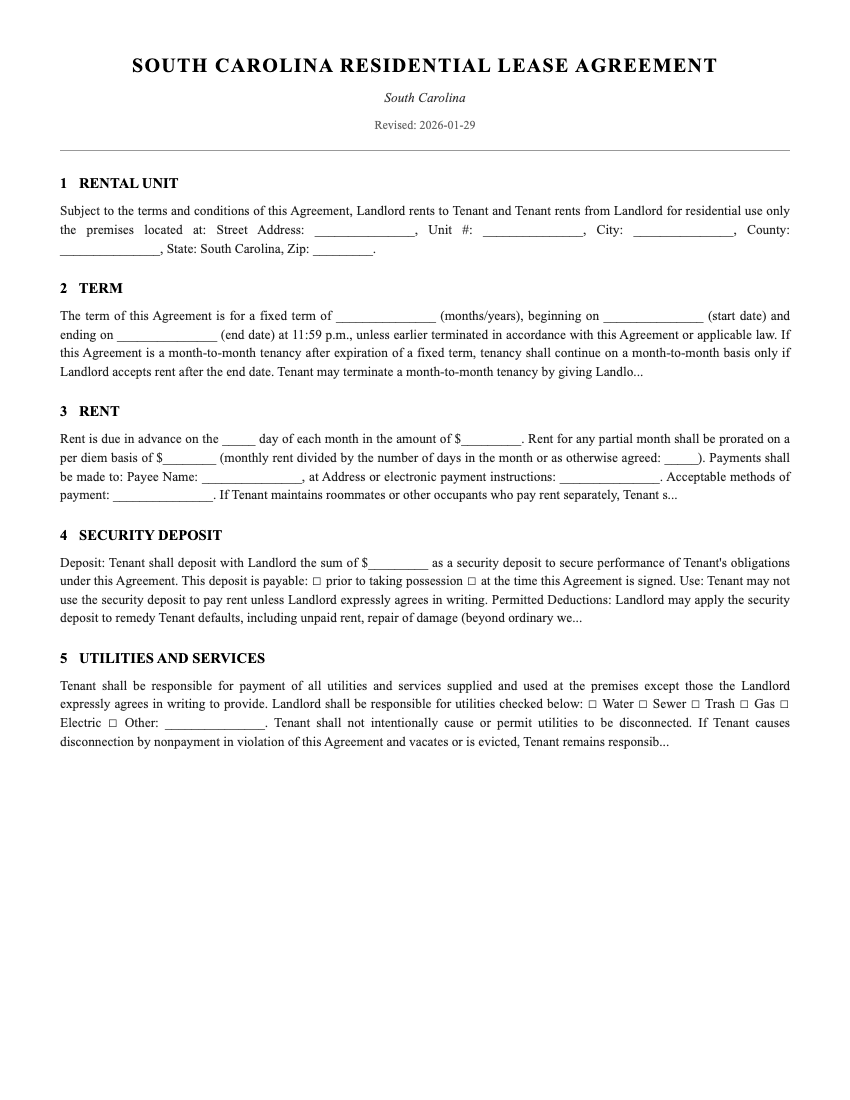
- Clear identification of parties, premises, and lease term (fixed-term and periodic options).
- Rent amount, due date, late fees (where lawful and reasonable), and returned payment policy.
- Security deposit clause aligned with the SOUTH CAROLINA RLTA: amount (no statutory cap), itemization requirement, return timeline (30 days), and note on interest (not required by state law unless agreed).
- Required disclosures: South Carolina RLTA notice language, federal lead-based paint disclosure (pre-1978 units), and a notice directing tenants to the South Carolina Sex Offender Registry (SLED).
- Maintenance and repair responsibilities, including notice procedures for repairs and a statement about habitability consistent with state law.
- Entry and access provisions balancing landlord access with tenant privacy (reasonable notice and emergency exceptions).
- Default remedies and eviction process summary with reference to summary ejectment procedures under state law and local court rules.
- Optional addenda: pet addendum, HOA/condo rules acknowledgment, roommate addendum, and short-term-rental disclosure checklist.
Related Lease Agreement Templates
Download Options
- Single-PDF Lease (fillable): /downloads/south-carolina-lease-agreement-2026.pdf — ready to download, edit, and print.
- Editable DOCX: Contact our support link (or use your own document editor) to convert the PDF to DOCX for customization.
- an AI contract review tool review: Upload your signed or draft lease to an AI contract review tool for a compliance and risk report before final signatures.
How to Finalize Your Lease
- Customize the template with property-specific details and any agreed provisions (pet policies, parking, utilities).
- Confirm required disclosures are included: RLTA notice, federal lead-based paint disclosure (if applicable), and SLED registry notice.
- Use an AI contract review tool to scan the finalized lease for inconsistent terms, missing state-specific clauses, and security deposit compliance.
- Execute the lease: have both parties sign and date the document; deliver fully executed copies to the landlord and tenant.
- Collect and document the security deposit and provide a written receipt. Keep the deposit in accordance with any agreed location/accounting method and follow itemization and return timing requirements.
- File executed lease and an AI contract review tool report in your records and, if applicable, register with any required local authorities.
Practical Tips for Landlords and Tenants
- Landlords: Do not assume a national form covers South Carolina specifics. Document condition with a move-in checklist and attach it to the lease.
- Tenants: If you live in a pre-1978 building, confirm you received the lead-based paint disclosure and HUD/EPA pamphlet before signing.
- Both parties: Agree on electronic signature and delivery methods in writing to avoid disputes over execution dates.
Common Clauses to Review Carefully
- Security deposit amount and exact return procedure (must include itemization and 30-day return language).
- Early termination options and any break fees.
- Notice periods for month-to-month tenancies (30 days is common and aligns with practice unless otherwise agreed).
- Remedies and fees for returned checks and late payments (must be reasonable and consistent with state law).
Final Note
This template is a starting point, not a substitute for legal advice. Use an AI contract review tool to check for compliance and consult a South Carolina attorney for complex situations (habitability disputes, contested evictions, or significant lease customizations).
<div class="ml-embedded" data-form="bBZ9zR"></div>
Frequently Asked Questions

About Designer Content
Designer Content creates practical legal document resources for landlords, contractors, and small business owners. We simplify complex legal concepts into actionable guidance. Connect with us on LinkedIn.