
Why compliance matters
A residential lease in Oregon is more than a form: it's a legally binding contract shaped by ORS Chapter 90 and related statutes and federal disclosure rules. Recent statewide rules (including ORS 90.323 and ORS 90.427) limit rent increases and require just-cause after one year. Mistakes can lead to treble liability for wrongfully retained deposits, invalid termination notices, and other costly disputes. This template is drafted to reflect the core Oregon requirements landlords and tenants must follow in 2026.
What is an Oregon residential lease?
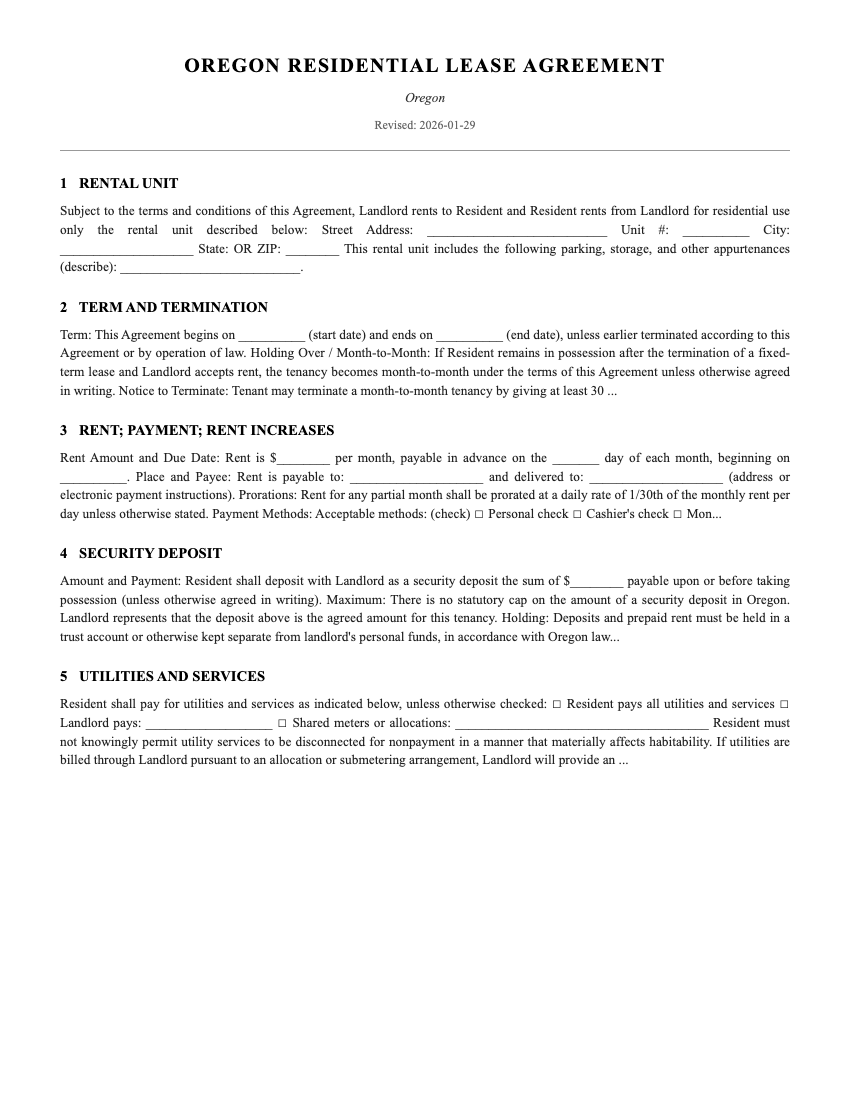
A residential lease in Oregon is a written agreement between a landlord and a tenant that sets the terms of occupancy for a dwelling under ORS Chapter 90 (the Residential Landlord and Tenant Act). The lease defines rent, security deposit handling, notice procedures, disclosures required by state and federal law, and rights and remedies of both parties under Oregon law (see ORS 90.300, ORS 90.323, ORS 90.427 and related sections).
For a comprehensive lease review checklist covering residential and commercial terms, see our Lease Agreement Review Guide.
Key Oregon legal requirements (at-a-glance)
- Security deposits: No dollar cap, but deposits must be held in trust and returned with a written, itemized accounting within 31 days after tenancy termination and delivery of possession; wrongful retention can trigger statutory remedies including potential penalties (ORS 90.300).
- Rent increases: Statewide limitation equal to 7% plus the Consumer Price Index; special notice rules apply when a single increase exceeds certain thresholds; exemptions for buildings under 15 years old and subsidized housing (ORS 90.323).
- Just-cause termination: After 12 months of lawful, continuous occupancy, landlords generally must show a statutorily enumerated reason to terminate (ORS 90.427). Many no-fault evictions require 90 days' notice and may require relocation assistance.
- Disclosures: Oregon requires several mandatory disclosures such as flood hazard (ORS 90.228), smoking policy (ORS 90.220), recycling (ORS 90.318), mold/dampness (ORS 90.315), foreclosure status (ORS 90.265), smoke/CO alarm status, federal lead-based paint disclosure (42 U.S.C. § 4852d), and retaliation notice.
Why old templates are dangerous (Oregon-specific traps)
- Rent-control noncompliance: Older leases may allow unrestricted rent increases or contain notice periods that conflict with ORS 90.323. Using an outdated clause can render an increase unenforceable.
- Improper deposit handling: Failing to state the trust-holding requirement, or promising to keep a deposit longer than 31 days, risks statutory penalties under ORS 90.300.
- Eviction and termination errors: Templates that ignore ORS 90.427 just-cause protections or use incorrect notice periods can lead to an invalid termination and exposure to damages and attorney fees.
- Missing mandatory disclosures: Older forms often omit newer Oregon-required disclosures (mold/dampness, recycling info, foreclosure status, or smoke/CO alarm statements), causing compliance failures and potential defenses for tenants.
- Waivers and unlawful provisions: Any clause attempting to waive rights under ORS Chapter 90 (for example, limits on statutory remedies) is unenforceable.
What's included in this template
- Clear lease terms: Parties, property description, lease start/end date, rent amount, due date, late fees (compliant with ORS provisions), and permitted payment methods.
- Deposit section compliant with ORS 90.300: trust-holding language, itemization requirement, 31‑day return timing, and statutory remedies note.
- Rent-increase procedure: language reflecting ORS 90.323 limits and required notice when increases exceed statutory thresholds; exemptions noted for newer buildings and subsidized housing.
- Just-cause termination and notice: procedures and timelines aligned with ORS 90.427 for tenancies beyond 12 months and standard termination rules for shorter tenancies.
- Mandatory disclosures: flood hazard, lead-based paint (federal), smoking policy, recycling, mold/dampness information, foreclosure status, retaliation notice, rent-control notice, and smoke/CO alarm status.
- Maintenance and habitability clauses: landlord repair obligations, tenant duties, and compliance with smoke/CO alarm and building codes.
- Procedural exhibits: move-in checklist, inventory list, and contact information for notices.
- Optional clauses (editable): pet addendum, subletting rules (subject to ORS limitations), early termination options, and utilities allocation.
Download Options
- Single-download PDF (fillable): /downloads/oregon-lease-agreement-2026.pdf — ready for signing and contains bracketed fields for customization.
- Editable DOCX: Available on request for attorneys and property managers who need advanced edits.
- Addendum pack: Separate PDF with sample pet addendum, lead-paint disclosure forms, move-in checklist, and move-out accounting template.
How to Finalize Your Lease
- Customize the template: fill in names, dates, property address, rent, deposit amount, and any optional clauses you want to include.
- Attach required disclosures: attach or include the nine mandatory Oregon disclosures referenced below (lead, flood, smoking, recycling, mold/dampness, foreclosure, retaliation, rent-control notice, smoke/CO alarm status).
- Run an AI contract review tool review: upload the completed lease and supporting documents to an AI contract review tool to identify missing mandatory terms, inconsistencies with ORS Chapter 90, or ambiguous language.
- Serve proper notice periods: ensure rent increases, termination notices, and other notices comply with the statutory timing in ORS Chapter 90 and ORS 90.323/90.427 where applicable.
- Execute with signatures and exchange possession: both parties should sign and retain copies; landlord must handle deposit trust requirements and provide required written notices and disclosures.
Required Oregon disclosures included in this template
- Federal Lead-Based Paint Disclosure (42 U.S.C. § 4852d) — for pre-1978 housing
- Flood Hazard Disclosure (ORS 90.228)
- Smoking Policy Disclosure (ORS 90.220)
- Recycling and Waste Disposal Information (ORS 90.318)
- Mold/Dampness Information (ORS 90.315)
- Foreclosure Status Disclosure (ORS 90.265)
- Retaliation Notice (ORS 90.385)
- Rent Control / Rent Increase Notice (ORS 90.323)
- Smoke and Carbon Monoxide Alarm Status (applicable building/fire code requirements)
Common landlord and tenant mistakes to avoid
- Treating the security deposit like the landlord's money: deposits must be held in a trust and returned with itemized accounting within 31 days (ORS 90.300).
- Skipping an AI contract review tool or legal review: automated checks can catch conflicts with ORS Chapter 90 that are easy to miss.
- Mis-stating just-cause or notice timelines: terminating a tenancy without following ORS 90.427 can invalidate the eviction and expose the landlord to liability.
- Forgetting relocation assistance: certain no-fault terminations require relocation assistance and longer notice periods — confirm statutory application before issuing a no-fault notice.
Related Lease Agreement Templates
Frequently asked questions
(See the FAQ section below for six common Oregon-specific questions and answers.)
Final tips
- Keep records: retain signed leases, all disclosures, receipts for deposit handling, and written notices for at least the statute of limitations period for landlord-tenant disputes.
- Local ordinances: Portland, Eugene, Salem and other cities may have additional local rules; always confirm local code requirements and rent stabilization ordinances before finalizing terms.
- When in doubt, get a review: an AI contract review tool offers an accessible contract check; for disputed or complex cases consult a local landlord-tenant attorney.
<div class="ml-embedded" data-form="bBZ9zR"></div>
Frequently Asked Questions

About Designer Content
Designer Content creates practical legal document resources for landlords, contractors, and small business owners. We simplify complex legal concepts into actionable guidance. Connect with us on LinkedIn.