
Introduction
Using a clear, up-to-date lease protects both landlords and tenants. In West Virginia, parties generally have contractual freedom to set rent, security deposit terms, and notice provisions, subject to court rules, federal housing disclosures, and any local ordinances. This template is written for typical residential tenancies and reflects key state practices: there is no statewide rent control, no statutory cap on deposits, federal lead-based paint disclosures apply for pre-1978 buildings, and written contracts are governed by a ten-year statute of limitations (W. Va. Code § 55-2-6).
This guide explains what to include, jurisdiction-specific risks, how to finalize a lease, and how to use an AI contract review tool to double-check contract language before signing.
For a comprehensive lease review checklist covering residential and commercial terms, see our Lease Agreement Review Guide.
What is a West Virginia residential lease?
A West Virginia residential lease is a written contract between a landlord and a tenant that sets the terms for occupying a dwelling (rent amount, term, security deposit, maintenance responsibilities, and notice procedures). West Virginia law does not impose a single statewide security-deposit cap or standard return deadline; federal lead-paint disclosure rules (42 U.S.C. § 4852d; 24 C.F.R. part 35) apply to units built before 1978. Written contract claims are generally subject to a 10-year statute of limitations under W. Va. Code § 55-2-6.
Why Old Templates Are Dangerous (West Virginia traps)
- No deposit cap is statewide: Older templates may reference deposit caps or return timeframes from other states. West Virginia has no statewide statutory cap; local ordinances may differ.
- Incorrect lead-paint disclosure: Federal law requires disclosure and provision of EPA/HUD pamphlets for units built before 1978 (42 U.S.C. § 4852d; 24 C.F.R. pt. 35). Failure to include these can lead to penalties and rescission claims in some circumstances.
- Inconsistent notice language: Eviction/summary ejectment procedure and notice periods are governed by local magistrate rules and practice. A generic notice period (from another state) may be unenforceable in your local court.
- Deposit return timing: Some templates mandate a strict statutory deadline (e.g., 14 or 21 days) typical in other states. West Virginia does not prescribe a single statewide deadline—use clear, reasonable timing and an itemized statement (recommend 30 days).
- Overreaching eviction clauses: Templates that attempt to waive tenant rights or require unlawful self-help evictions are void and can expose a landlord to liability.
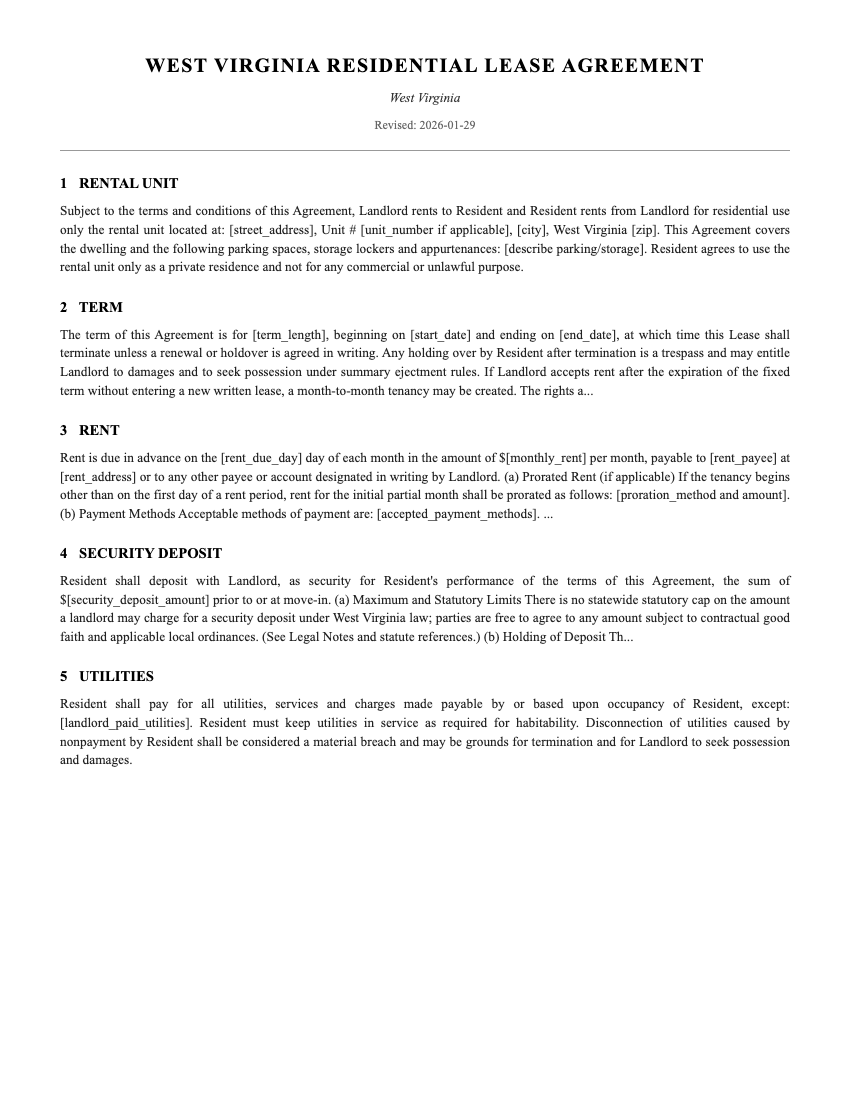
What's Included in This Template
- Fixed-term and month-to-month lease options
- Clear deposit section: amount, permitted deductions, itemization requirement, recommended return period (customizable; we recommend 30 days)
- Rent, late fee, and method of payment clauses (consistent with West Virginia practice)
- Maintenance and repair responsibilities, with instructions for habitability complaints
- Entry and notice provisions tailored for West Virginia practice (customize to local magistrate expectations)
- Federal lead-based paint disclosure language and attachment for properties built before 1978 (42 U.S.C. § 4852d; 24 C.F.R. pt. 35)
- Termination and holdover terms, including suggested notice language for month-to-month tenancies (30 days suggested unless lease or local law specifies otherwise)
- Optional addenda: pet addendum, lead-paint disclosure, lead-paint acknowledgement, and move-in checklist
- Signature blocks for Landlord and Tenant and fields for witnesses or co-signers
Download Options
- PDF (print-ready): /downloads/west-virginia-lease-agreement-2026.pdf
- DOCX (editable): /downloads/west-virginia-lease-agreement-2026.docx
Tips: Use the DOCX to customize deposit amounts, notice periods, and any municipality-specific requirements. After customizing, save a signed PDF for record-keeping.
How to Finalize Your Lease
- Fill in jurisdiction-specific fields: deposit amount, payment method, and local municipality if that triggers local ordinances.
- Attach required disclosures: Lead-based paint disclosure (for pre-1978 properties) and any local notices the municipality requires.
- Run the completed draft through an AI contract review tool for an automated review and recommended edits.
- Make negotiated edits in consultation with the other party; avoid unilateral changes after initial execution.
- Sign and date: have all tenants and the landlord sign. Consider initialing each page.
- Deliver executed copies and retain originals: provide tenants with a signed copy and keep the original lease for your records. Store digital copies in a secure location.
Who Needs This Document
This template is designed for both landlords and tenants who want a clear, West Virginia‑aware lease that addresses deposit handling, federal disclosures, and local court practice.
Related Lease Agreement Templates
FAQs
Refer to the FAQ section below for common West Virginia questions about deposits, disclosures, rent increases, notices and eviction.
Sources
See the Sources section at the end of this guide for links to statutes, federal disclosure rules, and West Virginia court information. Use those resources to confirm local rules and magistrate procedures before finalizing a lease.
<div class="ml-embedded" data-form="bBZ9zR"></div>
Frequently Asked Questions

About Designer Content
Designer Content creates practical legal document resources for landlords, contractors, and small business owners. We simplify complex legal concepts into actionable guidance. Connect with us on LinkedIn.