
Introduction
Creating a residential lease in Alabama requires more than filling in names and dates. Alabama follows the Uniform Residential Landlord and Tenant Act in Ala. Code Title 35, Chapter 9A, which governs required notices, how security deposits must be handled and accounted for, and the remedies available for breaches. Federal law also requires lead-based paint disclosures where applicable (42 U.S.C. § 4852d). Using a template tailored to Alabama reduces the risk of unenforceable provisions, improper security deposit handling, and defective notices that can delay or derail an eviction.
This article explains what an Alabama lease must address, highlights common local traps, and shows how to complete the downloadable 2026 Alabama Residential Lease Agreement. For an automated clause review, consider uploading your completed lease to an AI contract review tool to verify compliance and identify risky language.
For a comprehensive lease review checklist covering residential and commercial terms, see our Lease Agreement Review Guide.
What is an Alabama residential lease?
A residential lease in Alabama is a written contract between a landlord and a tenant that grants the tenant the right to occupy a dwelling for a specified term and sets the parties' rights and obligations. In Alabama, many aspects of residential leases are governed by the Uniform Residential Landlord and Tenant Act (Ala. Code Title 35, Chapter 9A), which prescribes required notices, security deposit accounting, remedies for breach, and other landlord-tenant duties.
Why Old Templates Are Dangerous (Alabama-specific traps)
- Security deposit mishandling: Alabama does not cap deposit amounts statewide, but Ala. Code Title 35, Chapter 9A requires landlords to account for deposits and return any balance within the statutory period. Old forms may omit the required accounting language or incorrect timelines.
- Incorrect notice language: Termination and eviction procedures in Alabama follow statutory and local rules. Using a template that references other-state notice periods or fails to comply with Ala. Code Title 35, Chapter 9A can invalidate a notice.
- Missing federal disclosures: Federal law (42 U.S.C. § 4852d) requires lead-based paint disclosure for pre-1978 housing. Older templates sometimes omit this entirely.
- Outdated remediation and habitability remedies: Remedies and repair timelines under Alabama law have specific procedures; outdated clauses may waive statutory remedies improperly or create ambiguity in cure periods.
- Local ordinance conflicts: Cities or counties in Alabama may impose local registration, safety, or inspection rules (for example, municipal rental registration). An old statewide-only template may not prompt users to check local rules.
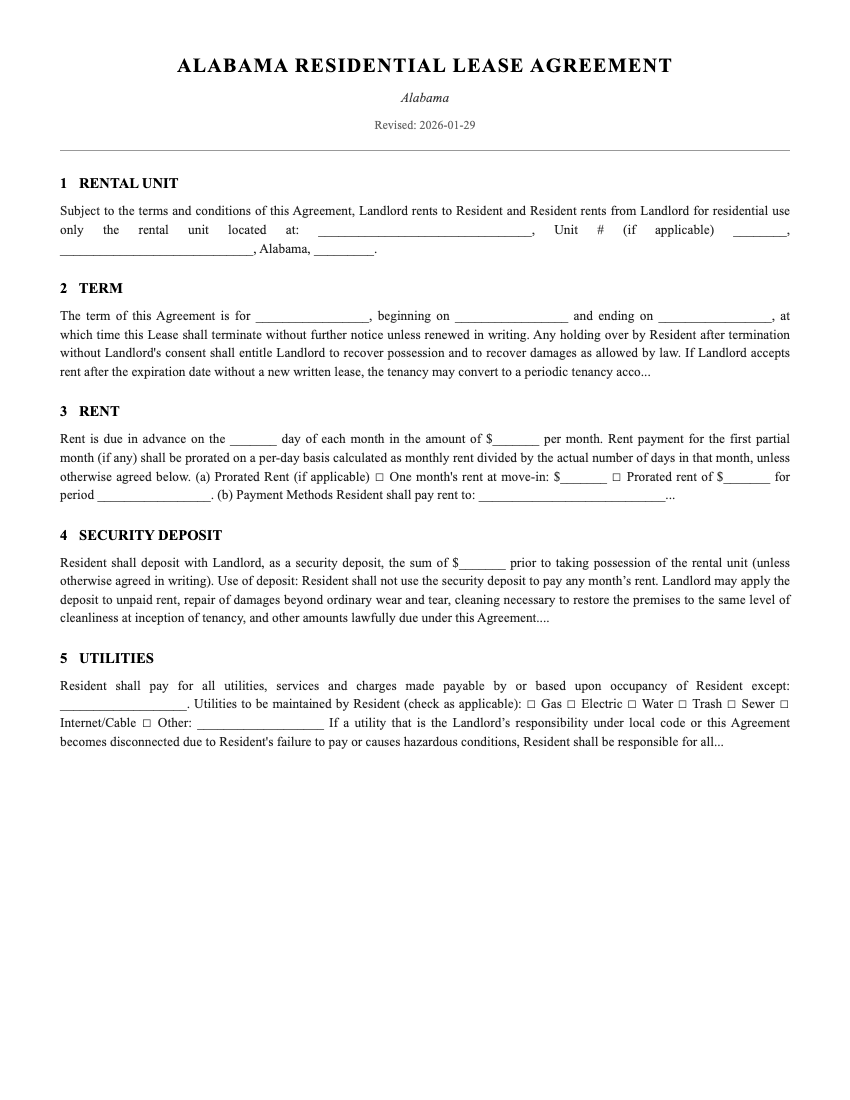
What's Included in This Template
- Parties and property identification
- Lease term (fixed-term and optional month-to-month addenda)
- Rent amount, due date, accepted payment methods and late fee provisions (consistent with Alabama rules)
- Security deposit clause with itemization, accounting and return procedures compliant with Ala. Code Title 35, Chapter 9A
- Maintenance and repair obligations, entry by landlord, and notice requirements
- Utilities allocation and common area rules
- Pet addendum and pet deposit language
- Early termination and subletting rules
- Default, cure procedures, and remedies (including process consistent with eviction statutes)
- Required disclosures: Lead-based paint disclosure (42 U.S.C. § 4852d), URLLTA required notices, and prompts to check local fire/health requirements
- Signature blocks, witness lines and an execution checklist
Each clause includes clear instructions and optional language depending on whether you want stricter landlord controls or tenant-friendly terms. The template is written to align with Ala. Code Title 35, Chapter 9A and federal disclosure requirements.
Related Lease Agreement Templates
Download Options
- Fillable PDF (recommended) — /downloads/alabama-lease-agreement-2026.pdf
- Word (.docx) version — use the PDF if you want a ready-to-sign form
- Printable one-page summary of key terms — quick checklist for tenants and landlords
When downloading, choose the version that best matches your signing method (electronic signature vs. in-person). After filling the template, run the document through an AI contract review tool before serving it to the other party.
How to Finalize Your Lease
- Fill all blanks completely and accurately (names, property description, rent amount and due date).
- Attach required disclosures (lead-paint pamphlet + signed disclosure for pre-1978 housing; URLLTA notices as applicable).
- Specify the security deposit accounting timeline and provide tenant with any local-required notices.
- Have both parties sign and date; include witness or notary if desired by local practice.
- Provide the tenant with a copy and retain the original for at least the statute of limitations period for written contracts (Ala. Code § 6-2-34 — six years).
- Upload the signed lease to an AI contract review tool for a final compliance scan and to store a secure copy.
Final notes and legal caution
This template is drafted to align with Alabama law and federal disclosure requirements, but it does not replace legal advice. For complex situations (rent-controlled local ordinances, habitability disputes, large deposits, or eviction litigation), consult a licensed Alabama attorney. Local municipal codes may add registration, inspection, or fee requirements; always verify local obligations before finalizing a lease.
<div class="ml-embedded" data-form="bBZ9zR"></div>
Frequently Asked Questions

About Designer Content
Designer Content creates practical legal document resources for landlords, contractors, and small business owners. We simplify complex legal concepts into actionable guidance. Connect with us on LinkedIn.